


Medical education and clinical training demand precision, realism, and repeatability. Yet many institutions still rely on limited cadavers, static charts, or generic plastic models that fail to represent anatomical complexity accurately. Here, our FDM 3D printer can help, but how?
Surgeons, educators, and medical device teams often struggle to visualise internal structures clearly, practice procedures safely, or demonstrate concepts effectively to diverse audiences. These gaps directly affect learning outcomes, procedural confidence, and patient communication.
Full-scale anatomical replicas created using advanced 3D printing address these challenges by combining accuracy, durability, and functional realism. With multi-material segmentation, these models replicate human anatomy in ways traditional tools cannot, making them indispensable for modern medical exhibits and training environments.
Anatomical models have long supported medical learning, but expectations have changed significantly. Today’s learners require interactive, high-fidelity tools that mirror real-world conditions. Medical exhibits and training programmes now prioritise realism, tactile feedback, and visual clarity.
Traditional models often oversimplify anatomy. They lack internal differentiation, realistic textures, and modularity. In contrast, full-scale 3D printed replicas offer precise anatomical representation, supporting both foundational education and advanced clinical training.
Inaccurate models can lead to misconceptions. Even small deviations in anatomical proportions may affect procedural understanding.
High-resolution replicas ensure that learners experience anatomy as it exists in real patients, improving spatial awareness and procedural confidence.
Multi-material segmentation refers to the use of different materials within a single anatomical model to represent varied tissues, structures, and mechanical properties. Hence, this approach allows bones, muscles, vessels, and organs to behave and appear differently, just as they do in the human body.
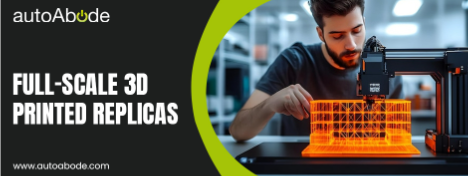
Using advanced additive manufacturing, each anatomical component is digitally segmented before printing. Therefore, an FDM 3D printer ensures precise boundaries, accurate positioning, and appropriate material assignment.
Medical exhibits require clarity, durability, and visual impact. Full-scale anatomical replicas meet these requirements while offering unmatched educational value.
Museums, medical colleges, and science centres use anatomical replicas to explain complex biological systems to varied audiences. Multi-material segmentation allows viewers to understand relationships between organs and systems intuitively.
Layered structures, removable components, and transparent sections make learning interactive rather than passive.
Medical device companies and healthcare institutions use anatomical replicas to demonstrate product applications, surgical pathways, and treatment outcomes.
These models communicate technical concepts effectively without relying solely on digital screens. Their physical presence enhances engagement and credibility during professional interactions.
Beyond exhibits, anatomical replicas play a crucial role in hands-on medical training.
Surgeons benefit from patient-specific or anatomically accurate models for planning complex procedures. Multi-material replicas allow practitioners to rehearse incisions, implant placements, or device navigation in a controlled environment.
This preparation reduces intraoperative uncertainty and enhances procedural efficiency.
Unlike cadavers, 3D printed models by FDM 3D printers can be reused repeatedly. Trainees can practice techniques multiple times without ethical, logistical, or preservation concerns.
So, this repetition builds muscle memory and confidence, particularly for minimally invasive or high-risk procedures.
Full-scale anatomical replicas offer several advantages compared to conventional teaching aids.
Compared to Cadavers
No degradation over time
No ethical or regulatory constraints
Easier storage and transport
Customisable anatomy and pathology
Compared to Standard
Plastic Models
Higher anatomical fidelity
Functional tissue simulation
Better representation of internal relationships
Custom segmentation based on training needs
These advantages make 3D printed replicas a practical long-term investment.
Creating multi-material anatomical replicas requires sophisticated manufacturing capabilities. Technologies such as material jetting, multi-extrusion fused deposition modelling, and hybrid additive processes enable precise control over material placement.
High-resolution scanning, medical imaging data, and CAD modelling form the digital foundation of these replicas. Each structure is mapped accurately before printing, ensuring dimensional correctness and functional realism.
Working with an indigenous manufacturer offers strategic advantages for medical institutions. Local production ensures faster turnaround times, better collaboration, and compliance with regional standards.
Indigenous manufacturers also understand local clinical needs, educational frameworks, and logistical constraints, enabling more relevant and cost-effective solutions.
Different medical specialities require different anatomical emphasis. Multi-material segmentation allows customisation at every level.
Speciality-Specific Applications
Orthopaedics: Bone density variation, joint articulation
Cardiology: Flexible vessels, layered heart structures
Neurology: Detailed brain segmentation, nerve pathways
Dentistry: Tooth enamel, dentin, and nerve differentiation
Such customisation ensures that training models align precisely with learning objectives.
Anatomical replicas are increasingly used to explain conditions and procedures to patients. Visual and tactile models improve understanding, reduce anxiety, and support informed consent.
Multi-material segmentation helps patients visualise affected areas clearly. This clarity strengthens trust and improves communication between clinicians and patients.
Medical training tools must withstand frequent handling. Anatomical replicas printed by FDM 3D printers are designed for durability without sacrificing detail.
Advanced materials resist wear, deformation, and environmental exposure. Modular components can be replaced individually, extending the model’s lifespan and reducing maintenance costs.
Modern additive manufacturing minimises material waste. Indigenous production further reduces transportation emissions, aligning with sustainability goals increasingly valued by healthcare institutions.
Despite their advantages, developing high-quality anatomical replicas requires careful planning.
Ø Accurate medical data sourcing
Ø Appropriate material selection for realism
Ø Validation by medical professionals
Ø Alignment with training or exhibit objectives
Collaboration between clinicians, engineers, and designers is essential to achieve optimal outcomes.
Future developments may integrate sensors, augmented reality overlays, and haptic feedback, further enhancing training realism. Indigenous manufacturers with strong 3D printing expertise are well-positioned to support this evolution.
Hence, visit autoAbode to install an FDM printer to make anatomical replicas.
Full-scale anatomical replicas with multi-material segmentation are redefining medical exhibits and training. They address long-standing challenges in realism, accessibility, and repeatability while supporting diverse applications across education, clinical practice, and patient communication.
Therefore, by leveraging an advanced FDM 3D printer and collaborating with indigenous manufacturing partners, medical institutions gain precise, durable, and customisable tools tailored to their needs.
As healthcare education demands continue to rise, these anatomical replicas stand out as a practical, future-ready solution. It bridges the gap between theory and real-world practice.
Full-scale anatomical replicas support hands-on learning by allowing students and clinicians to visualise, handle, and practice on highly accurate human anatomy models.
Yes, anatomical replicas can be tailored for specialities such as orthopaedics, cardiology, neurology, or dentistry.
Indigenous manufacturers offer faster production, easier collaboration, and better alignment with local medical standards. They also provide greater flexibility for customisation and ongoing support.
Multi-material segmentation enables different tissues to be represented using varied textures, colours, and flexibility levels. FDM 3D printers help learners distinguish between bones, muscles, vessels, and organs.
3D printed models by FDM printers offer repeatability, durability, and ease of handling without ethical or storage concerns.
Explore how technology is making the difference. Explore autoAbode Solutions