
AI Drone Swarms: DRDO's Autonomous Swarm Interceptor Explained
Rakesh Sharma
Senior Technical Writer at Autoabode · Autoabode
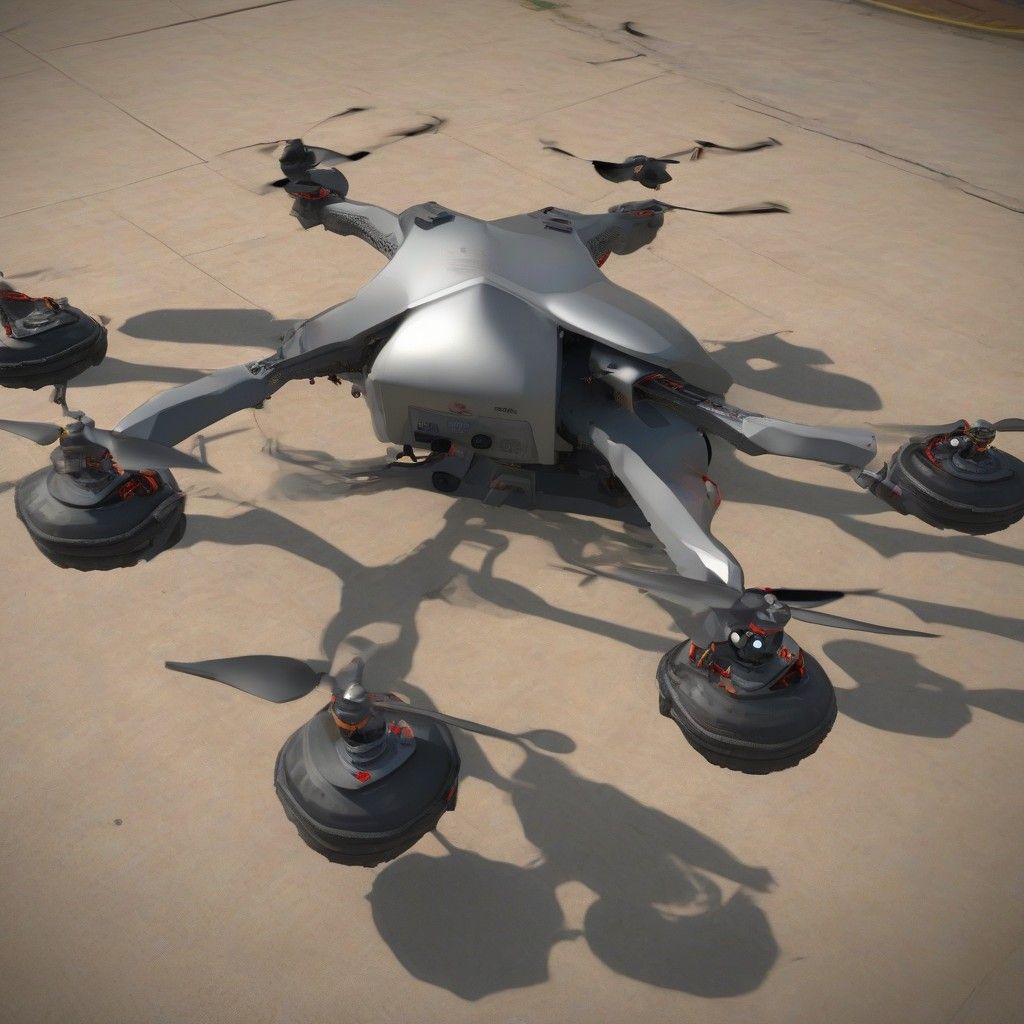
The advent of AI-driven drone swarms has marked a new era in military and defense technology. In India, the Defense Research and Development Organization (DRDO) has emerged as a pioneer in this field with its Autonomous Swarm Interceptor system. This advanced UAV solution integrates cutting-edge artificial intelligence, autonomous navigation, and swarm coordination to address modern security challenges. In this technical deep dive, we explore how Autoabode's Duper XL series (FDM) 3D printers and SinterX Pro (SLS) systems support DRDO's innovations in AI drone swarms.
The Evolution of UAV Technology
Unmanned Aerial Vehicles (UAVs) have come a long way from their early surveillance missions. Today, they are integral to defense strategies worldwide. The Indian government's emphasis on 'Make in India' and the PLI scheme has accelerated本地制造和技术创新,使印度成为全球 UAV 制造的中心。
DRDO's Autonomous Swarm Interceptor: A Breakthrough
DRDO's Autonomous Swarm Interceptor is a game-changer in UAV technology. This system enables multiple drones to operate collaboratively, making decision-making and mission execution autonomous. The swarm can adapt to dynamic environments, perform complex maneuvers, and even intercept threats with precision.
Key Features of the Swarm Interceptor: - AI-driven decision-making - Autonomous navigation and collision avoidance - Real-time data processing for threat detection - Scalable swarm size (up to 20 drones) - Integration with ground-based command systems
- Precision Navigation: Equipped with advanced GPS and inertial navigation systems.
- AI-Powered Threat Detection: Uses machine learning algorithms for real-time threat analysis.
- Swarm Coordination: Inter-drone communication ensures seamless teamwork and adaptive mission execution.
- Modular Design: Compatible with various payloads, including cameras, sensors, and interception devices.
The Role of Additive Manufacturing in UAV Production
Additive manufacturing (AM) has become a cornerstone of modern UAV production. Autoabode's Duper XL series (FDM) 3D printers and SinterX Pro (SLS) systems play a pivotal role in producing high-performance UAV components efficiently and cost-effectively. These technologies enable the rapid prototyping and mass production of complex geometries, ensuring UAVs meet stringent performance standards.
For instance, the Duper XL series is widely used for manufacturing lightweight yet durable UAV frames. Its FDM technology ensures precision and scalability, making it ideal for both prototyping and large-scale production. Similarly, the SinterX Pro's SLS capabilities are perfect for creating intricate parts like engine components and payload housings, which require high strength and thermal resistance.
Autoabode's 3D printing solutions also align with India's 'Make in India' initiative. By enabling localized production of UAV components, Autoabode supports DRDO and Indian defense companies in reducing costs and improving supply chain efficiency.
The Future of AI Drone Swarms
As AI and swarm technology continue to evolve, the applications of UAVs will expand beyond defense into areas like disaster management, search and rescue, and infrastructure monitoring. Autoabode's collaboration with DRDO and Indian defense organizations positions India at the forefront of this technological revolution.
Looking ahead, we can expect more sophisticated AI algorithms, enhanced autonomous capabilities, and greater integration between UAVs and other advanced technologies like blockchain for secure communication. The sky is no longer the limit—these innovations are just the beginning of a new era in aerospace technology.
Rakesh Sharma
Senior Technical Writer at Autoabode · Autoabode Consumer Electronics Pvt. Ltd.
Expert author at Autoabode — writing at the intersection of industrial 3D printing, defence manufacturing, and advanced UAV systems. Based in New Delhi, India.
Explore Autoabode's Platforms
This article is part of Autoabode's technical journal. Learn more about our core platforms built in India for defence, aerospace, medical and industrial teams:
More from the Journal
Off-Grid Communication Solutions for Mountainous Terrain: An Engineering Field Guide for India's High-Altitude Operators
Off-grid communication solutions for mountainous terrain are not optional in India — they are the difference between a coordinated operation and a stranded section. This engineering field guide breaks down the radio physics that defeats conventional VHF/UHF in the Himalayas, the mesh architectures that survive ridge-line shadowing, and the cold-weather, power-budget and security trade-offs that determine whether a system delivers in the Karakoram and Western Ghats. Built around real deployment data from Autoabode's MeshVani encrypted communicator and MeshVani Relay platform in service with the Indian Army, ITBP, NDRF and high-altitude expedition teams.
Drones & UAV · 7 min readModular UAV Payloads for Multi-Role Missions: A Technical Guide
Explore the technical specifications and strategic advantages of modular UAV payloads for multi-role missions. This guide covers hot-swap systems, sensor fusion, and real-world applications for defense and industry.