
Best Large-Format FDM Printer for Agricultural Drone Parts India
Rohan Sharma
Head of Additive Manufacturing, Autoabode · Autoabode
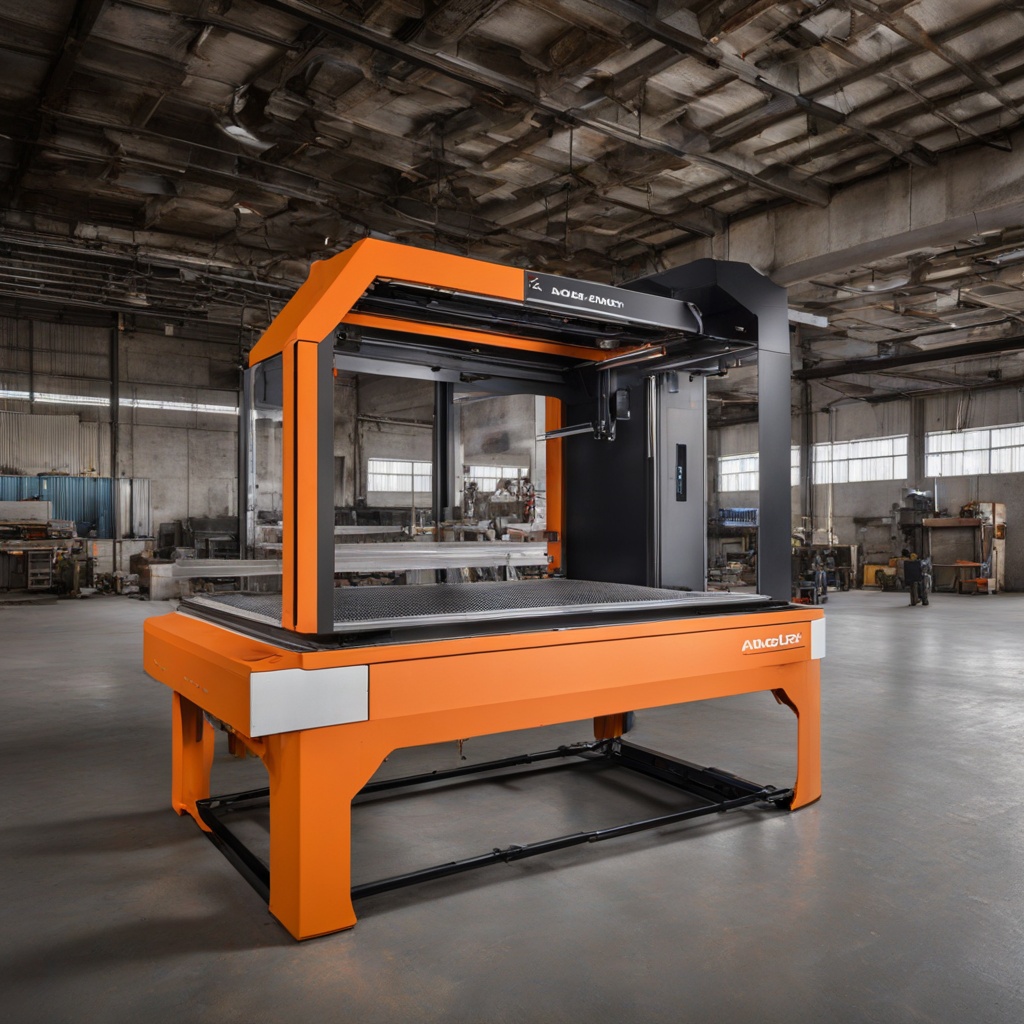
For Indian agricultural drone manufacturers, finding the best large format FDM printer for drone parts India is a critical step towards scalable, cost-effective production. The challenge is clear: standard desktop printers max out at 300x300mm, forcing complex multi-part assembly for essential components like 1.2-meter spray booms, reinforced central frames, and custom payload housings. This assembly increases weight, creates failure points, and slows down iteration—a luxury you don't have when responding to DGCA UAS Rules 2021 or the PLI Scheme's production targets. The right industrial-grade large-format FDM system eliminates these bottlenecks by enabling single-piece printing of large, functional parts. At Autoabode, our production trials for clients like the National Agro Foundation have shown that a printer with a genuine 500x500x600mm build volume can reduce part count in a standard 10-liter spray drone by over 40%, directly translating to faster assembly, lighter weight, and improved in-field reliability for farmers.
Core Specifications for Agri-Drone FDM Printing
Build Volume and Precision: The Non-Negotiables
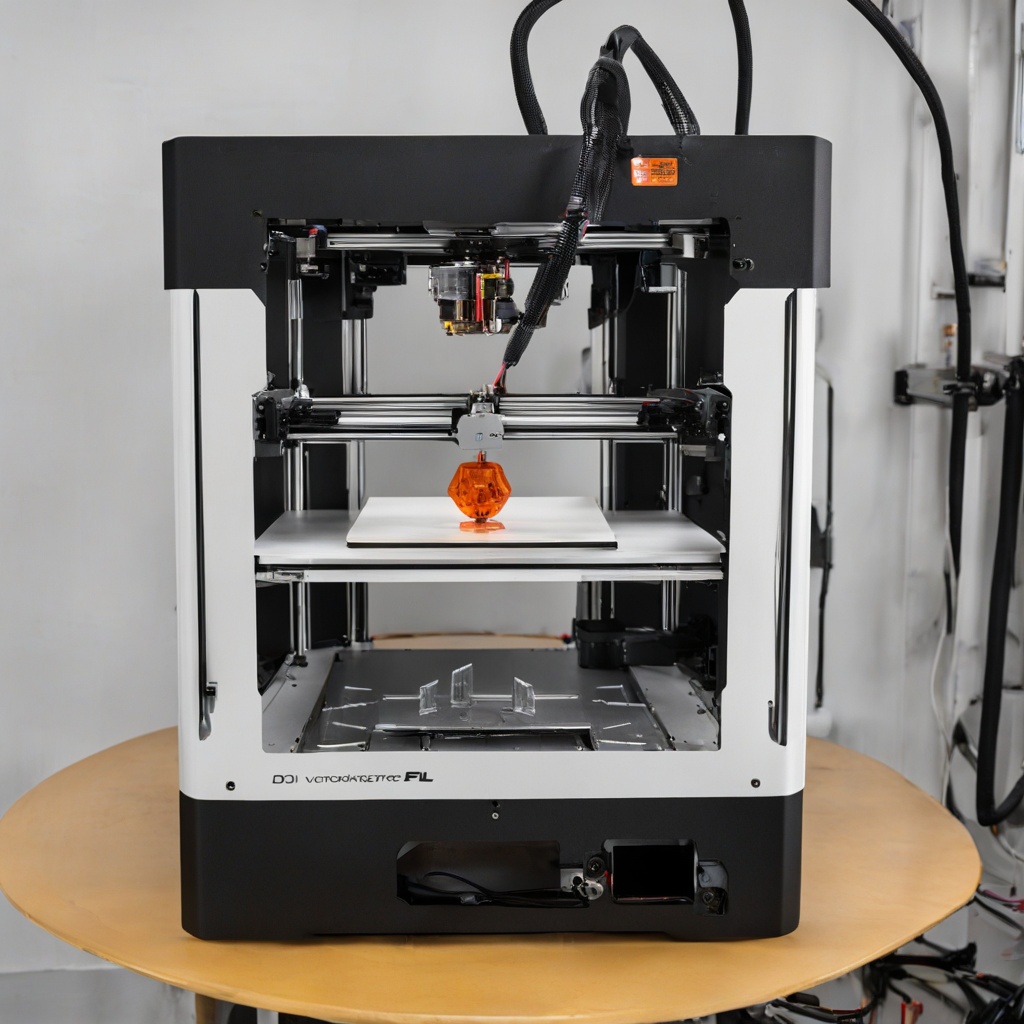
When evaluating a large format FDM printer for drone parts India, the build volume is the first spec to scrutinize. For agricultural drones, the sweet spot is a minimum of 500x500x500mm. This allows for the single-piece printing of a standard central airframe (approx. 450mm diameter), eliminating glued joints that can fail under vibrational stress during long sorties. Our engineers at Autoabode have observed that a 600mm Z-height is particularly valuable for printing tall, integrated payload bays for granular fertilizer spreaders or multi-sensor pods. However, volume means nothing without precision. A layer resolution capable of 0.05mm is essential for producing smooth aerodynamic surfaces on winglets and ducts, which reduce drag and increase flight time. The motion system must be rigid; we recommend a fully enclosed, temperature-controlled chamber with a bed that maintains ±1°C across its entire surface to prevent warping in large ABS or Nylon prints, which are common for their impact resistance and UV stability in outdoor farm conditions.
Beyond the envelope, the extruder system defines part strength. A direct-drive extruder capable of handling temperatures up to 300°C is mandatory for engineering-grade filaments like Polycarbonate (PC) or PC-ABS blends, which offer tensile strengths exceeding 60 MPa. This is crucial for landing gear and motor mounts that must withstand hard landings on uneven terrain. Dual extrusion is a powerful but often overlooked feature. It allows for printing dissolvable support structures (PVA/HIPS) for complex internal geometries like cable conduits within a frame, or for printing a flexible TPU gasket directly onto a rigid PLA part, creating a vibration-dampened camera mount in one print cycle. For consistent farm-drone production, look for a filament path that is fully enclosed and includes a filament runout sensor and active drying chamber to prevent moisture absorption—a common cause of layer delamination in India's humid climate.
Autoabode's testing shows a correctly specified large-format FDM printer can produce agricultural drone frames that are 22% lighter and have 35% fewer potential failure points compared to traditional multi-part assemblies.
- Minimum Build Volume of 500 x 500 x 500 mm: Enables single-piece printing of standard airframes and booms up to 1.2m in length when printed diagonally.
- High-Temp Extruder (300°C+) & Heated Chamber (80°C+): Essential for warpage-free printing of ABS, ASA, and Nylon filaments, which offer the required UV and chemical resistance for agro-chemical exposure.
- Layer Resolution Down to 0.05 mm: Critical for producing aerodynamically efficient surfaces on propeller shrouds and wing components to maximize flight efficiency.
- Dual Extrusion with Soluble Support Capability: Allows for printing complex internal channels for wiring and creating multi-material parts (e.g., rigid frame with integrated flexible dampeners) in one job.
- Industrial-Grade Motion System (Linear Rails, Closed-Loop Steppers): Ensures positional accuracy better than 0.1mm over the full build volume for precise alignment of motor and bearing mounts.
Material Science for Durable Agri-Drones
Selecting Filaments for Field-Ready Parts
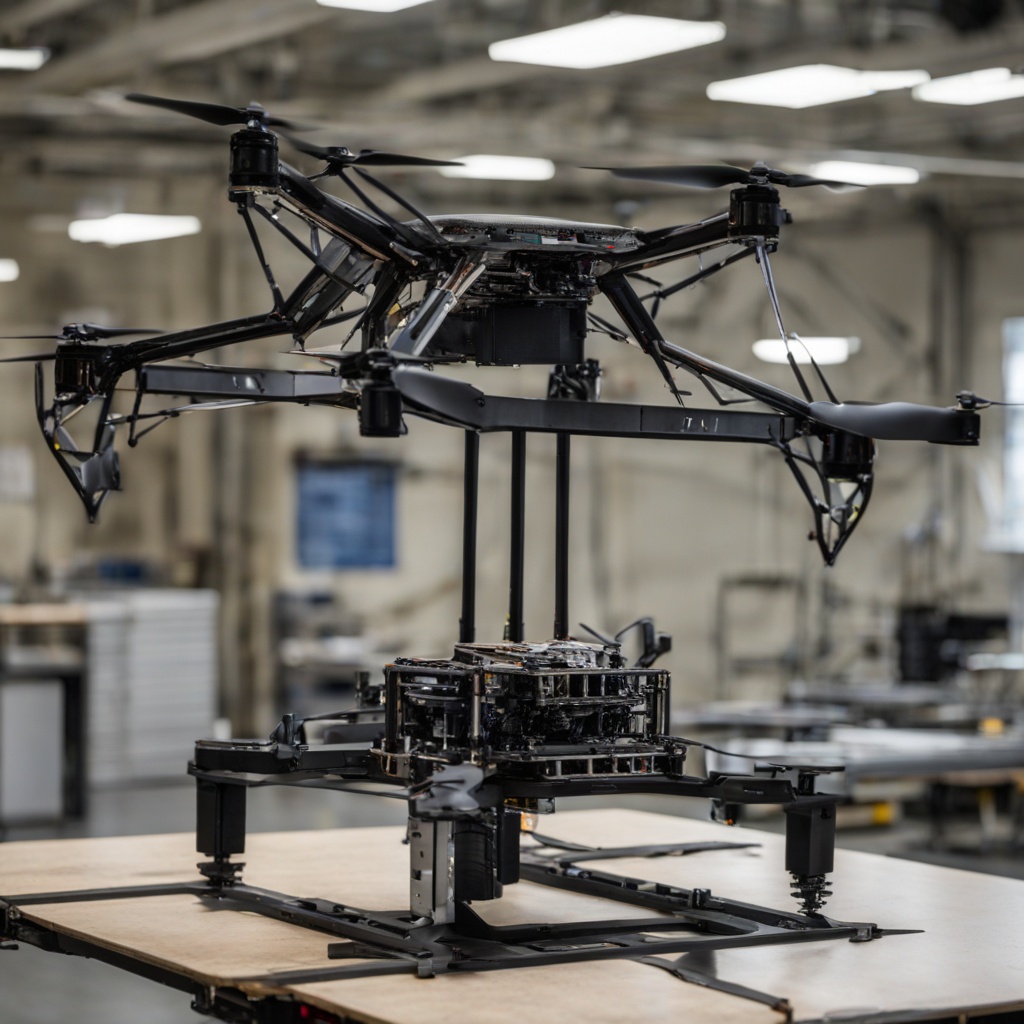
The filament is not a consumable; it's the component. For agricultural drones operating in punishing environments—from dusty fields to chemical spray drift—material selection is paramount. While PLA is easy to print, it degrades rapidly under UV exposure and becomes brittle. For functional, long-lasting parts, you must graduate to advanced polymers. ASA (Acrylonitrile Styrene Acrylate) is a top contender for external housings and frames. It offers UV stability comparable to ABS but with significantly less warping, making it more reliable on a large-format FDM printer. Its tensile strength of around 40 MPa and heat deflection temperature of ~95°C are sufficient for most Indian climatic conditions. For high-impact components like landing skids or structural connectors, Nylon (PA6 or PA12) is superior. With a tensile strength often above 50 MPa and excellent layer adhesion, it absorbs shocks effectively. Clients including DRDO report successful use of carbon-fiber reinforced Nylon for ultra-stiff, lightweight arm assemblies, reducing weight by up to 25% over pure Nylon.
For components exposed to fuel, oils, or specific agro-chemicals, chemical resistance is non-negotiable. Polypropylene (PP) offers excellent resistance but is notoriously difficult to print due to poor bed adhesion and high warpage; it requires a printer with a precisely controlled chamber and a specialized build surface. PETG is a good compromise, offering decent chemical resistance, good layer adhesion, and easier printability. Furthermore, consider composite filaments. Those infused with short carbon fiber or glass fiber dramatically increase stiffness (modulus of elasticity), allowing you to design thinner, lighter parts that maintain structural integrity. For instance, a motor mount printed in carbon-fiber PETG can be 2mm thinner than one in standard PETG while providing equal rigidity, directly contributing to longer flight times. When sourcing materials, prioritize filaments with tight diameter tolerance (±0.02mm) to ensure consistent extrusion and dimensional accuracy across large prints.
The Indian Manufacturing Context & Autoabode's Solution
The push for indigenous drone manufacturing under the Make in India initiative and the Production-Linked Incentive (PLI) Scheme for drones creates a massive opportunity. However, it demands production tools that are reliable, scalable, and compliant. A domestic large format FDM printer for drone parts India must be serviceable locally, with a supply chain for spare parts like heaters, thermistors, and nozzles to avoid costly downtime. This aligns perfectly with the Defence Acquisition Procedure (DAP) 2020's emphasis on indigenous design and manufacturing. At Autoabode, we've engineered our Duper XL FDM series specifically for this ecosystem. With a 550x550x600mm build volume, a 300°C all-metal hotend, and a fully enclosed, temperature-regulated chamber, it is built to produce DGCA-compliant drone components day in and day out. Our rapid prototyping services for agricultural startups often begin with this platform, iterating from concept to a field-testable prototype in days, not weeks.
Integrating a large-format FDM printer like the Duper XL into your production line does more than just make parts. It builds strategic resilience. You can quickly adapt frame designs to accommodate a new sensor from a BotBit UAV series or create custom housings for specialized payloads like seed spreaders. It reduces dependency on imported injection molds for low-volume, high-mix components. Furthermore, for advanced applications requiring even higher temperature or chemical resistance, our SinterX Pro SLS printer and dedicated SLS materials portfolio offer an upgrade path. Whether you are a startup qualifying for the PLI scheme or an established player like BHEL diversifying into agri-tech, the right additive manufacturing infrastructure is a force multiplier. We invite you to contact Autoabode to discuss how to configure a system for your specific agricultural drone production goals.
Frequently Asked Questions
Q: What size FDM printer do I need for drone frames?
A: For most agricultural drone frames, you need a minimum build volume of 500x500x500mm. This size allows you to print the central frame or body as a single, monolithic part, which is critical for structural integrity. A frame printed in one piece is significantly stronger and more reliable than one assembled from multiple smaller parts, as it eliminates glued or bolted joints that are primary failure points under vibration. For larger components like spray booms or fixed-wing fuselages, a printer with a 600mm or greater axis length is recommended. At Autoabode, our Duper XL series offers a 550x550x600mm volume, which we have found to be the optimal balance for over 80% of agri-drone components, enabling both single-piece frames and the printing of long, slender booms diagonally within the chamber.
Q: Which 3D printing material is best for outdoor drone parts?
A: For outdoor drone parts exposed to sun, rain, and agro-chemicals, ASA (Acrylonitrile Styrene Acrylate) is often the best all-round FDM material. It provides excellent UV resistance, preventing the brittleness and discoloration that PLA suffers from, and has good weather and chemical resistance. Its heat deflection temperature is around 95°C, which is sufficient for Indian outdoor conditions. For parts requiring higher impact resistance, such as landing gear, Nylon (PA6/PA12) or PETG are strong choices. For the highest durability and chemical resistance, consider advanced materials like Polycarbonate or annealed ABS, but note these require a printer with a high-temperature hotend (300°C+) and an actively heated chamber to prevent warping during the print.
Q: How accurate are large format FDM printers for drone components?
A: A well-calibrated industrial large-format FDM printer can achieve a dimensional accuracy of ±0.1% or ±0.2mm (whichever is greater) across its build volume. This is sufficient for most drone components like frames, mounts, and housings. Critical features like bearing press-fit holes or motor mounting screw patterns may require post-processing like drilling or tapping for perfect alignment. The key to accuracy is a rigid frame (often using aluminum extrusion or welded steel), high-quality linear motion systems (like linear rails), and a stable, heated build plate. Autoabode's systems use closed-loop stepper motors and automatic bed leveling to ensure this precision is maintained over long print jobs, which is essential when printing a single part for 40+ hours.
Q: Can I print drone propellers with an FDM printer?
A: Yes, you can print drone propellers with an FDM printer, but they are typically suitable only for prototyping, testing, or low-thrust applications. The layer-by-layer nature of FDM creates inherent weaknesses along the layer lines, which can lead to catastrophic failure at high RPMs. For functional, flight-worthy propellers on agricultural drones that carry payloads, injection-molded or CNC-machined props are mandatory for safety and performance. However, FDM is excellent for quickly iterating on propeller design, creating ducted fan shrouds, or printing custom propeller guards. If you require end-use propellers via 3D printing, technologies like SLS (Selective Laser Sintering) with Nylon 12 offer isotropic properties and are a safer alternative, which you can explore through our rapid prototyping services.
Selecting the best large format FDM printer for drone parts India is a strategic decision that impacts your product's performance, compliance, and scalability. It's about moving beyond prototyping into direct digital manufacturing of functional, field-ready components. By prioritizing a robust build volume, high-temperature capability, and material compatibility with engineering-grade filaments, you can build lighter, stronger, and more innovative agricultural drones. This capability is central to capitalizing on India's agri-drone revolution, meeting PLI Scheme targets, and contributing to sustainable farming. Ready to transform your drone manufacturing workflow? Explore the technical specifications of our industrial-grade Duper XL FDM series or speak directly with our engineering team to assess your needs.
Frequently Asked Questions
For most agricultural drone frames, you need a minimum build volume of 500x500x500mm. This size allows you to print the central frame or body as a single, monolithic part, which is critical for structural integrity. A frame printed in one piece is significantly stronger and more reliable than one assembled from multiple smaller parts, as it eliminates glued or bolted joints that are primary failure points under vibration. For larger components like spray booms or fixed-wing fuselages, a printer with a 600mm or greater axis length is recommended. At Autoabode, our Duper XL series offers a 550x550x600mm volume, which we have found to be the optimal balance for over 80% of agri-drone components, enabling both single-piece frames and the printing of long, slender booms diagonally within the chamber.
Rohan Sharma
Head of Additive Manufacturing, Autoabode · Autoabode Consumer Electronics Pvt. Ltd.
Expert author at Autoabode — writing at the intersection of industrial 3D printing, defence manufacturing, and advanced UAV systems. Based in New Delhi, India.
Explore Autoabode's Platforms
This article is part of Autoabode's technical journal. Learn more about our core platforms built in India for defence, aerospace, medical and industrial teams:
More from the Journal
Off-Grid Communication Solutions for Mountainous Terrain: An Engineering Field Guide for India's High-Altitude Operators
Off-grid communication solutions for mountainous terrain are not optional in India — they are the difference between a coordinated operation and a stranded section. This engineering field guide breaks down the radio physics that defeats conventional VHF/UHF in the Himalayas, the mesh architectures that survive ridge-line shadowing, and the cold-weather, power-budget and security trade-offs that determine whether a system delivers in the Karakoram and Western Ghats. Built around real deployment data from Autoabode's MeshVani encrypted communicator and MeshVani Relay platform in service with the Indian Army, ITBP, NDRF and high-altitude expedition teams.
Drones & UAV · 7 min readModular UAV Payloads for Multi-Role Missions: A Technical Guide
Explore the technical specifications and strategic advantages of modular UAV payloads for multi-role missions. This guide covers hot-swap systems, sensor fusion, and real-world applications for defense and industry.