
Bio-Printing Evolution: Transitioning from Research Lab to Clinic
Prof. Michael Chen
Director of Bio-Fabrication Research, Autoabode Labs · Autoabode
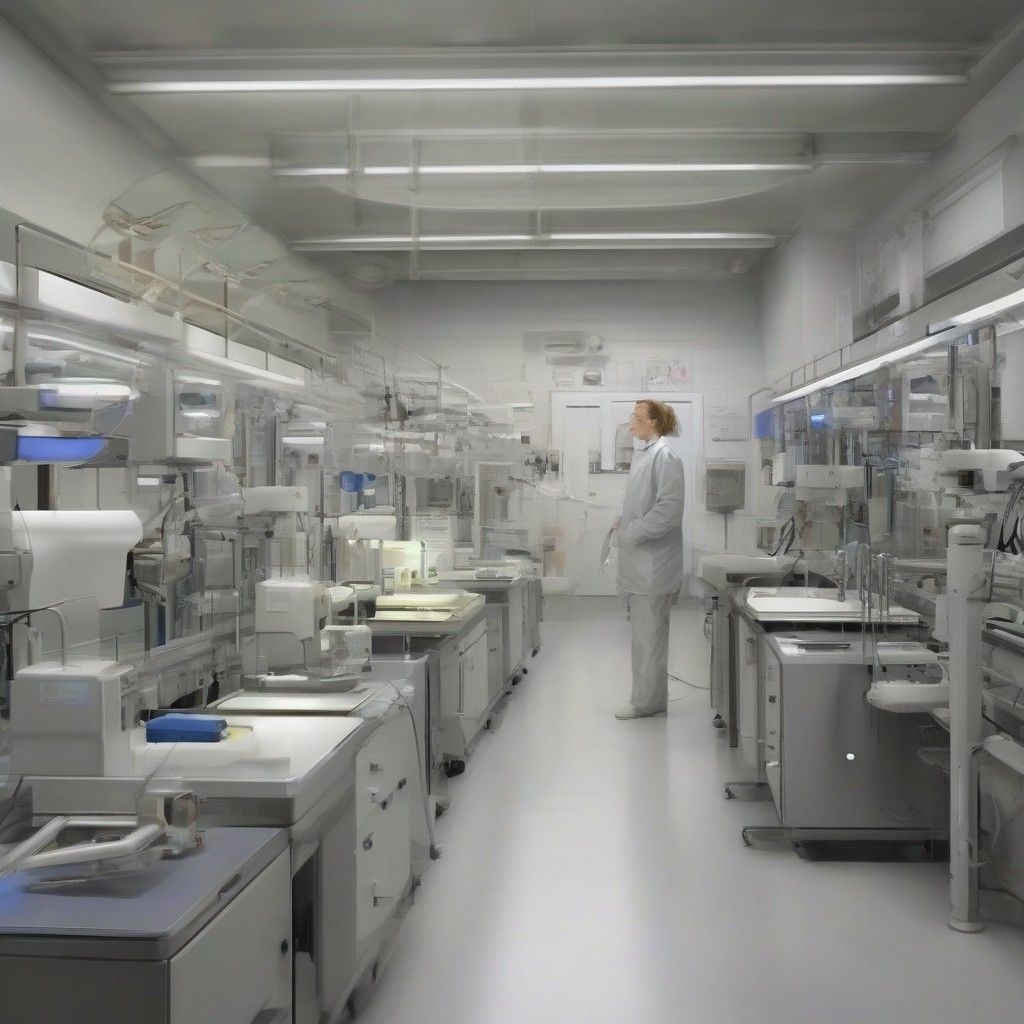
Bio-printing — the deposition of living cells, growth factors, and biomaterials in precise three-dimensional architectures — has been a laboratory promise for over two decades. Today, that promise is beginning to cross the threshold into clinical reality. The transition navigates a minefield of regulatory frameworks, vascularization challenges, and the fundamental biological complexity of living systems.
The Vascularization Problem
The central challenge of tissue engineering has always been vascularization. Any tissue thicker than approximately 200 micrometres requires an internal blood vessel network to deliver oxygen and remove waste. Without it, cells in the interior of a printed construct die within days. This physical limitation has kept bio-printed tissues thin and avascular — skin patches, cartilage sheets, corneal grafts — while the thicker, vascularized organs remained out of reach.
Several approaches are converging to crack this problem. Sacrificial templating uses water-soluble inks co-printed alongside the cell-laden bioink. Once the construct gels, the sacrificial material is flushed out, leaving behind patent micro-channels that can be seeded with endothelial cells to form vessel walls. Another approach uses coaxial nozzles that extrude a cell-laden shell around a hollow core — printed vasculature in a single pass.
Autoabode's Bio-Printer uses a triaxial coaxial nozzle system capable of printing hollow channels down to 150μm internal diameter, enabling perfusable construct manufacturing in academic and clinical research settings.
Regulatory Frameworks: A Moving Target
Regulatory approval for bio-printed medical products is complex. In the United States, the FDA classifies bio-printed constructs based on their mechanism of action — products that exert a pharmacological effect fall under drug regulation; those with a structural function fall under device regulation; and those that achieve their effect through metabolic activity of living cells fall under CBER purview — sometimes triggering all three simultaneously.
What Has Reached the Clinic?
- Custom craniofacial implants (hydroxyapatite/PCL composite scaffolds) — CE marked, in routine clinical use across Europe.
- Bio-printed tracheal cartilage rings — first-in-human implantation documented, conditional approval pending.
- Skin grafts for severe burns using autologous cell-laden hydrogels — in Phase II clinical trials in the USA and South Korea.
- Corneal stroma equivalents — printed using keratocyte-laden collagen bioinks — entering Phase I safety trials.
- Patient-specific auricular cartilage scaffolds — CBER Breakthrough Device designation granted.
Bioink Science: Engineering the Living Matrix
Bioink formulation is as much art as science. The material must be printable (viscosity between 30–6×10⁷ mPa·s), support cell viability during and after printing, and remodel over time to match the target tissue's mechanical environment. The most promising bioink platforms include gelatin methacryloyl (GelMA), which can be photocrosslinked with visible light immediately after deposition, and decellularized extracellular matrix (dECM) inks derived from the target organ itself.
The Path from Lab to Clinic
Most bio-printing research institutions operate Bio-Safety Level 1 or 2 facilities using GMP-adjacent practices. The transition to a clinical-grade manufacturing environment requires ISO 13485, cleanroom infrastructure (ISO Class 7 minimum), and rigorous process validation documentation. Autoabode's bio-printer systems ship with FDA 21 CFR Part 11-compliant software for full batch record traceability — a prerequisite for teams beginning the regulatory pathway.
Prof. Michael Chen
Director of Bio-Fabrication Research, Autoabode Labs · Autoabode Consumer Electronics Pvt. Ltd.
Expert author at Autoabode — writing at the intersection of industrial 3D printing, defence manufacturing, and advanced UAV systems. Based in New Delhi, India.
Explore Autoabode's Platforms
This article is part of Autoabode's technical journal. Learn more about our core platforms built in India for defence, aerospace, medical and industrial teams:
More from the Journal
Off-Grid Communication Solutions for Mountainous Terrain: An Engineering Field Guide for India's High-Altitude Operators
Off-grid communication solutions for mountainous terrain are not optional in India — they are the difference between a coordinated operation and a stranded section. This engineering field guide breaks down the radio physics that defeats conventional VHF/UHF in the Himalayas, the mesh architectures that survive ridge-line shadowing, and the cold-weather, power-budget and security trade-offs that determine whether a system delivers in the Karakoram and Western Ghats. Built around real deployment data from Autoabode's MeshVani encrypted communicator and MeshVani Relay platform in service with the Indian Army, ITBP, NDRF and high-altitude expedition teams.
Drones & UAV · 7 min readModular UAV Payloads for Multi-Role Missions: A Technical Guide
Explore the technical specifications and strategic advantages of modular UAV payloads for multi-role missions. This guide covers hot-swap systems, sensor fusion, and real-world applications for defense and industry.