
Carbon Fibre Reinforced Additive Manufacturing: Matching Metal at Polymer Weight
Rahul Sharma
Senior Technical Writer at Autoabode · Autoabode
The aerospace and defense industries have always sought materials that balance strength with weight. Carbon fibre reinforced polymers (CFRP) have emerged as a game-changer, offering exceptional strength-to-weight ratios while maintaining durability. Additive manufacturing (AM), or 3D printing, has further revolutionized the production of CFRP components by enabling complex geometries and reducing material waste.
The Evolution of Carbon Fibre Reinforced Additive Manufacturing
From Concept to Reality: How CFRAM Works
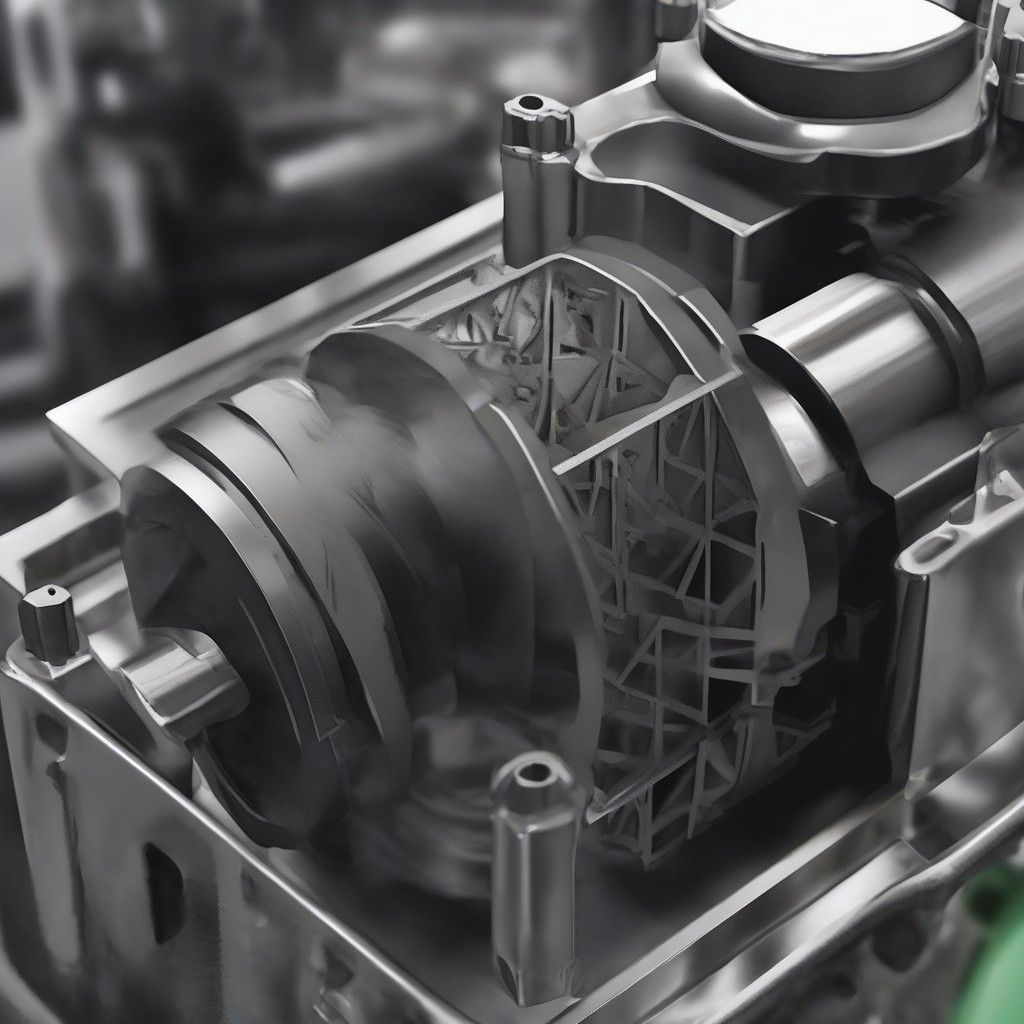
Carbon fibre reinforced additive manufacturing (CFRAM) integrates the precision of 3D printing with the strength of carbon fibres. This process involves layer-by-layer deposition of polymer resin infused with carbon fibres, creating intricate lattice structures that mimic metal's strength while achieving polymer-level weight efficiency.
CFRAM offers a unique advantage: it matches the mechanical properties of metals at a fraction of their weight, making it ideal for applications where every gram counts.
- Reduces material waste by up to 70% compared to traditional manufacturing methods.
- Achieves 95% part density with optimized lattice structures.
- Supports end-use parts for aerospace, defense, and automotive industries.
- Complies with stringent quality standards set by organizations like DRDO and DGCA.
Autoabode's Pioneering Role in CFRAM
At Autoabode, we have developed the Duper XL series of FDM printers and the SinterX Pro SLS systems to cater to the growing demand for CFRAM. These machines are designed to handle high-performance materials like carbon fibre-impregnated resins, enabling the production of lightweight yet robust components.
Our Duper XL series offers industrial-grade precision with dual extrusion capabilities, allowing simultaneous printing of structural polymers and carbon fibres. The SinterX Pro complements this by providing a powder-bed fusion process for creating metal-like lattice structures using CFRP.
The integration of these technologies is not just about hardware; it's also about software. Autoabode's proprietary slicing algorithms optimize layer geometries for maximum strength and minimal weight, ensuring that every part meets the stringent requirements of defense and aerospace applications.
Cost-Effective Solutions for High-Stakes Industries
The Make in India initiative has been instrumental in fostering innovation within India's manufacturing sector. Autoabode is at the forefront of this movement, providing indigenous solutions that reduce reliance on imported technologies while maintaining global standards.
Our products are designed to align with DRDO specifications, ensuring that defense applications benefit from cutting-edge AM technology. The PLI scheme has further enabled us to offer cost-effective solutions without compromising on quality.
For instance, the BotBit UAVs and UGV Interceptor platforms utilize CFRAM components manufactured using Autoabode's Duper XL series. These unmanned systems have demonstrated superior performance in harsh environments, showcasing the effectiveness of CFRAM in real-world applications.
Looking ahead, the future of additive manufacturing lies in hybrid materials and intelligent process control. Autoabode is committed to pushing the boundaries of what's possible with CFRAM, ensuring that India remains at the forefront of this technological revolution.
Rahul Sharma
Senior Technical Writer at Autoabode · Autoabode Consumer Electronics Pvt. Ltd.
Expert author at Autoabode — writing at the intersection of industrial 3D printing, defence manufacturing, and advanced UAV systems. Based in New Delhi, India.
Explore Autoabode's Platforms
This article is part of Autoabode's technical journal. Learn more about our core platforms built in India for defence, aerospace, medical and industrial teams:
More from the Journal
Off-Grid Communication Solutions for Mountainous Terrain: An Engineering Field Guide for India's High-Altitude Operators
Off-grid communication solutions for mountainous terrain are not optional in India — they are the difference between a coordinated operation and a stranded section. This engineering field guide breaks down the radio physics that defeats conventional VHF/UHF in the Himalayas, the mesh architectures that survive ridge-line shadowing, and the cold-weather, power-budget and security trade-offs that determine whether a system delivers in the Karakoram and Western Ghats. Built around real deployment data from Autoabode's MeshVani encrypted communicator and MeshVani Relay platform in service with the Indian Army, ITBP, NDRF and high-altitude expedition teams.
Drones & UAV · 7 min readModular UAV Payloads for Multi-Role Missions: A Technical Guide
Explore the technical specifications and strategic advantages of modular UAV payloads for multi-role missions. This guide covers hot-swap systems, sensor fusion, and real-world applications for defense and industry.