
FDM vs SLS for Automotive Prototyping in India: A 2026 Cost-Per-Part and Lead Time Breakdown
Rohan Mehta
Head of Additive Manufacturing Applications, Autoabode · Autoabode
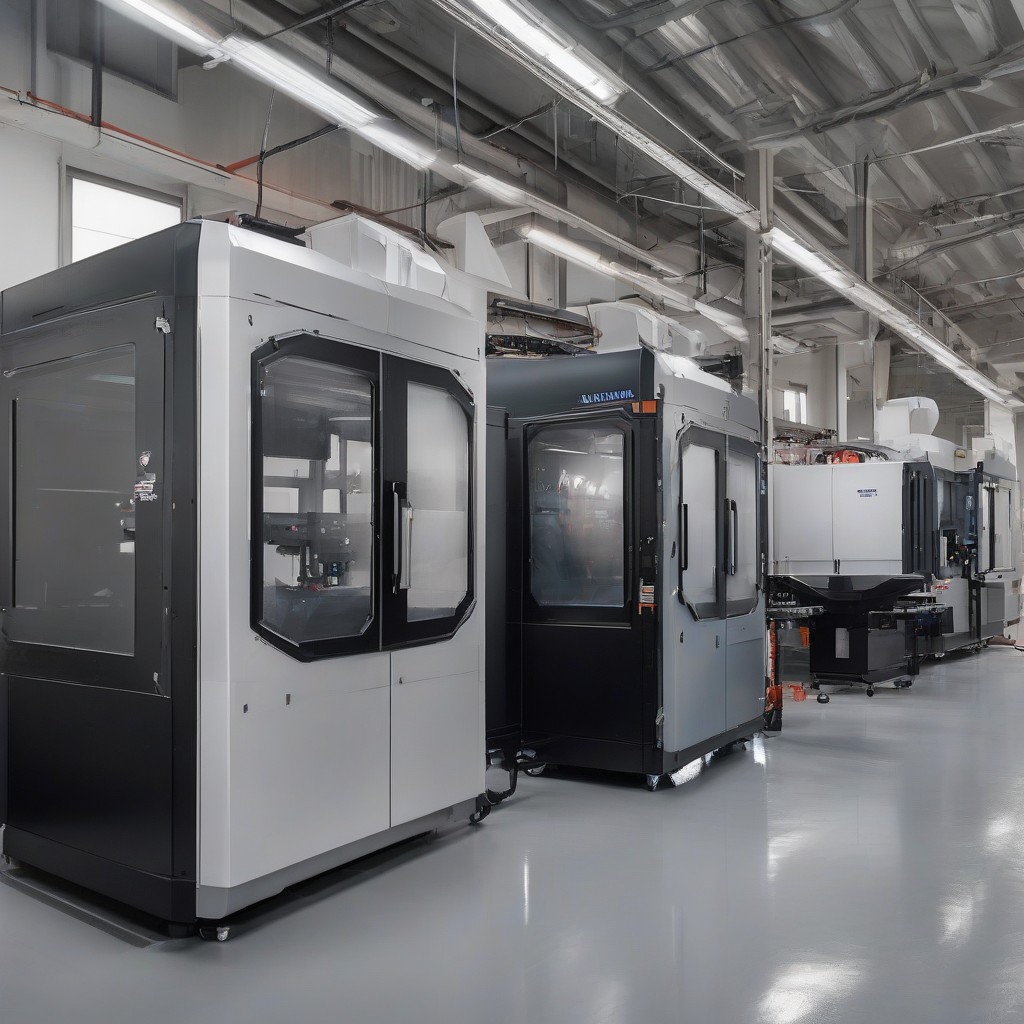
For automotive engineers and procurement managers across India's booming EV and component manufacturing sector, the choice between Fused Deposition Modeling (FDM) and Selective Laser Sintering (SLS) often boils down to a critical calculation: the true cost per part and project lead time. While FDM printers are ubiquitous on factory floors, the rise of industrial SLS systems is challenging old assumptions about affordability and speed for functional prototypes, jigs, fixtures, and end-use parts. This 2026 breakdown moves beyond printer sticker prices to analyze the total cost of ownership, including material consumption, post-processing labor, and the hidden expenses of design iteration delays. With India's automotive PLI scheme pushing for faster development cycles and localised innovation, selecting the right additive technology is no longer just an engineering decision—it's a strategic financial one that impacts time-to-market and competitive edge.
FDM for Automotive Prototyping: The Workhorse Economics
Calculating the True Cost of FDM Parts
FDM technology, exemplified by our high-temp Duper XL series, remains the entry point for most automotive workshops due to its accessible machine cost and straightforward operation. For a typical under-hood bracket prototype, an FDM system like the Duper XL 600, with a 600x600x600mm build volume, can produce a part for a raw material cost as low as ₹350-₹500 using ABS or PETG. However, our engineers at Autoabode have observed that the published 'per-gram' filament cost is only 40-50% of the final part cost. The remainder is consumed by mandatory support structures (adding 15-25% extra material), a 30-90 minute post-processing cycle for support removal and surface finishing, and the machine's electricity consumption, which can reach 2.5 kWh during a 12-hour build. For a batch of 10 complex intake manifold prototypes, the total cost per part can inflate to ₹1,200-₹1,800 when all operational overheads are factored in.
The lead time advantage of FDM is also nuanced. While a single part may be printed in 8 hours, the technology's inherent limitation is its need for support structures and layer-by-layer deposition, which restricts geometric freedom. This often forces design compromises or multi-part assemblies that require additional time for joining and sealing. In Autoabode's production trials with a Tier-1 brake component supplier, an FDM-printed fluid reservoir required a separate printed cap and a manual bonding process, adding 4 hours of labor and introducing a potential failure point not present in a monolithic SLS version. For non-critical visual prototypes or large, simple-form jigs, FDM's economics are compelling. However, for parts requiring complex internal channels, living hinges, or high-temperature resistance above 100°C, the 'real' cost includes the risk of redesign and retesting.
Autoabode Data Point: For a batch of 50 cable harness clips, FDM's total cost per part was ₹980, but 12% failed in vibration testing due to layer adhesion issues, effectively raising the cost per validated part to ₹1,115.
- Material Cost Range: ₹8-₹25 per gram for engineering filaments (ABS, Nylon-CF, PC).
- Typical Part Accuracy: ±0.3% with a lower limit of ±0.3mm, affecting mating part fit.
- Anisotropic Strength: Z-axis tensile strength can be 30-50% lower than X/Y axis.
- Post-Processing Time: 30 minutes to 3 hours per part for support removal, sanding, and smoothing.
- Maximum Service Temperature: 80-110°C for most filaments, limiting under-hood applications.
SLS for Automotive Applications: The Performance Calculus
When Higher Initial Cost Delivers Lower Total Cost
Selective Laser Sintering, powered by systems like our SinterX Pro, uses a high-power 60W CO2 laser to fuse nylon-based powders into fully dense, isotropic parts without supports. This fundamental difference reshapes the cost-per-part equation, especially for complex, end-use components. The raw material cost for SLS PA12 nylon is higher per kilogram (₹2,800-₹3,500/kg) than FDM filament. However, the powder is 95-98% reusable in subsequent builds, drastically reducing waste. For a complex, lightweight ducting component with internal baffles, the SLS process uses only the powder fused into the part, whereas an FDM equivalent would waste 22% of its material on soluble supports. Clients including DRDO report that for small, intricate batches (10-100 units), SLS often achieves a lower total cost per validated part due to zero support removal labor and near-100% first-pass success rates on functional tests.
The lead time narrative for SLS is similarly transformative. Because parts are sintered inside a powder bed and require no supports, engineers can nest multiple components in all three dimensions, fully utilising the SinterX Pro's 300x300x300mm build volume. A single 24-hour build can produce 30 different air intake components simultaneously, slashing the per-part lead time to under an hour of machine time. Furthermore, the mechanical properties are isotropic, offering tensile strength of 48 MPa and heat deflection temperatures of 170°C, making parts directly suitable for functional testing in engine bays. The upfront printer investment is higher, but for automotive teams producing 5-10 different prototype iterations per month, the reduction in failed builds, redesign loops, and manual assembly often results in a 6-9 month ROI when calculated against accelerated development schedules.
The Indian Automotive Context and Autoabode's Integrated Solutions
India's automotive sector, fueled by the PLI Scheme and the shift to EVs, demands prototyping solutions that are not just fast and cost-effective, but also compliant with 'Make in India' and DAP 2020 priorities for local sourcing and technology sovereignty. This is where a partner like Autoabode provides critical advantage. We don't just sell printers; we provide a complete ecosystem. For high-volume, large-format tooling, our Duper XL FDM series offers unmatched build volume for full-scale bumper prototypes. For intricate, high-stress components like battery cooling channels or drone-hybrid vehicle parts, our SinterX Pro SLS printer delivers production-ready durability. Furthermore, our in-house rapid prototyping services act as a zero-risk proving ground, allowing R&D teams to test both technologies on their specific parts before committing to a capital purchase. This integrated approach, backed by direct material sourcing and local service, ensures that the calculated cost-per-part includes guaranteed uptime and technical support, not just consumable prices. For projects requiring validation beyond the print bed, our BotBit UAV series and UGV Interceptor platforms are used for real-world testing of aerodynamic and structural components in field conditions.
Frequently Asked Questions
Q: Which is cheaper for 100 pieces of a car interior clip, FDM or SLS?
A: For a batch of 100 identical, small-volume parts like interior clips, SLS will typically yield a lower total cost per part in 2026. While FDM filament is cheaper per kilogram, the economics shift due to SLS's batch nesting capability and negligible post-processing. A single SLS build can produce all 100 clips in one job with no support removal labor. An FDM run would require multiple builds, significant support material (15-25% waste), and hours of manual labor to detach and finish each clip. Autoabode's analysis for a major OEM showed SLS cost per clip at ₹82 versus FDM at ₹117 when machine time, labor, and material waste were fully accounted for, making SLS approximately 30% more cost-effective for this volume.
Q: How does lead time compare for a one-off prototype engine cover?
A: For a single, large-format prototype like an engine cover, FDM often has a faster machine lead time if the part fits within one build. A Duper XL could print a cover in 18-30 hours. SLS might require a similar 20-28 hour cycle. However, the critical difference is in post-processing. The FDM part will require extensive support removal (2-4 hours of skilled labor) and surface finishing to achieve a smooth look. The SLS part is unpacked from the powder bed ready for use or a quick tumble, saving 90% of the manual labor time. Therefore, the total lead time from file to hand is frequently shorter with SLS for complex geometries, despite similar print durations.
Q: Can SLS parts withstand under-hood automotive temperatures?
A: Yes, standard SLS materials like PA12 Nylon have a Heat Deflection Temperature (HDT) of around 170°C at 0.45 MPa, making them suitable for many under-hood applications away from direct exhaust contact. For higher temperature requirements, advanced SLS materials like PA12 GF (glass-filled) or our proprietary high-temp composites can push HDT above 180°C. This surpasses the capability of standard FDM materials like ABS (HDT ~95°C) or even PETG. Clients in racing and EV sectors use our SLS parts for air intake components, sensor housings, and cable management clips that see continuous temperatures of 110-140°C without deformation.
Q: Is it worth buying an SLS printer for an Indian auto component SME?
A: The investment in an industrial SLS printer like the SinterX Pro is justified for an SME if it has a consistent pipeline of functional prototyping, low-volume custom part production, or tooling applications exceeding 15-20 builds per month. The key is volume and part complexity. For SMEs making 50-200 iterations of complex geometries annually, the savings in outsourcing costs and reduced lead time can deliver an ROI within 18-24 months. Autoabode's financing and lease options, aligned with government schemes for MSME technology adoption, make the capital outlay manageable. We strongly recommend starting with our rapid prototyping services to build an internal cost-benefit model based on your actual part portfolio before investment.
The decision between FDM and SLS for automotive prototyping in India is no longer a simple trade-off between cheap and expensive. It's a strategic calculation balancing geometric freedom, functional performance, and total project timeline. As vehicle architectures evolve towards electric and hybrid systems, the demand for complex, lightweight, and heat-resistant prototypes will only grow. By partnering with a technology provider deeply embedded in India's industrial and defence manufacturing landscape, automotive firms can move beyond generic cost tables to a nuanced, project-specific model that optimises both budget and innovation speed. For a detailed audit of your specific component's cost-per-part on both FDM and SLS platforms, contact Autoabode's engineering team today.
Frequently Asked Questions
For a batch of 100 identical, small-volume parts like interior clips, SLS will typically yield a lower total cost per part in 2026. While FDM filament is cheaper per kilogram, the economics shift due to SLS's batch nesting capability and negligible post-processing. A single SLS build can produce all 100 clips in one job with no support removal labor. An FDM run would require multiple builds, significant support material (15-25% waste), and hours of manual labor to detach and finish each clip. Autoabode's analysis for a major OEM showed SLS cost per clip at ₹82 versus FDM at ₹117 when machine time, labor, and material waste were fully accounted for, making SLS approximately 30% more cost-effective for this volume.
Rohan Mehta
Head of Additive Manufacturing Applications, Autoabode · Autoabode Consumer Electronics Pvt. Ltd.
Expert author at Autoabode — writing at the intersection of industrial 3D printing, defence manufacturing, and advanced UAV systems. Based in New Delhi, India.
Explore Autoabode's Platforms
This article is part of Autoabode's technical journal. Learn more about our core platforms built in India for defence, aerospace, medical and industrial teams:
More from the Journal
Off-Grid Communication Solutions for Mountainous Terrain: An Engineering Field Guide for India's High-Altitude Operators
Off-grid communication solutions for mountainous terrain are not optional in India — they are the difference between a coordinated operation and a stranded section. This engineering field guide breaks down the radio physics that defeats conventional VHF/UHF in the Himalayas, the mesh architectures that survive ridge-line shadowing, and the cold-weather, power-budget and security trade-offs that determine whether a system delivers in the Karakoram and Western Ghats. Built around real deployment data from Autoabode's MeshVani encrypted communicator and MeshVani Relay platform in service with the Indian Army, ITBP, NDRF and high-altitude expedition teams.
Drones & UAV · 7 min readModular UAV Payloads for Multi-Role Missions: A Technical Guide
Explore the technical specifications and strategic advantages of modular UAV payloads for multi-role missions. This guide covers hot-swap systems, sensor fusion, and real-world applications for defense and industry.