
Field-Deployable 3D Printing for On-Demand Drone Manufacturing: A Technical Guide for Indian Army Units
Col. (Retd.) Vikram Singh Rathore
Head of Defence Applications, Autoabode · Autoabode
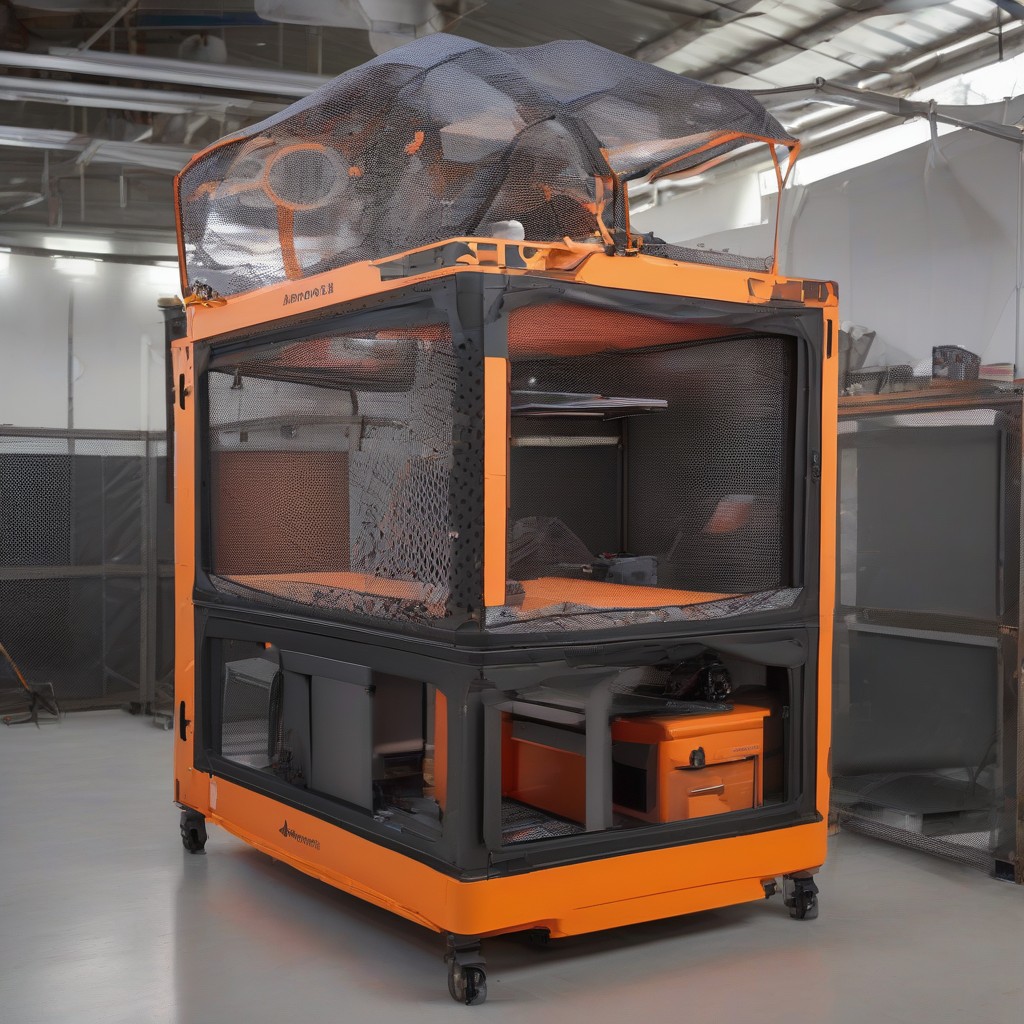
The ability to 3D print drones on the battlefield in India represents a paradigm shift in tactical logistics and operational resilience for forward-deployed units. Traditional supply chains for UAV components and spares are vulnerable to disruption, leading to critical capability gaps during extended operations. This technical guide details how Indian Army units can establish autonomous, on-demand manufacturing cells using ruggedized 3D printing systems. By deploying compact, field-ready printers, units can transition from being consumers of pre-supplied hardware to producers of mission-specific unmanned systems. Our engineers at Autoabode have observed that a single forward operating base equipped with the right additive manufacturing setup can reduce the logistical footprint for drone support by over 60%, while cutting the replacement time for a damaged rotor arm or custom sensor mount from weeks to mere hours. This capability directly supports the Indian Army's focus on theater-level self-sufficiency, a cornerstone of modern asymmetric warfare doctrine.
Tactical Printer Specifications for Harsh Environments
Ruggedized Hardware for Forward Deployment
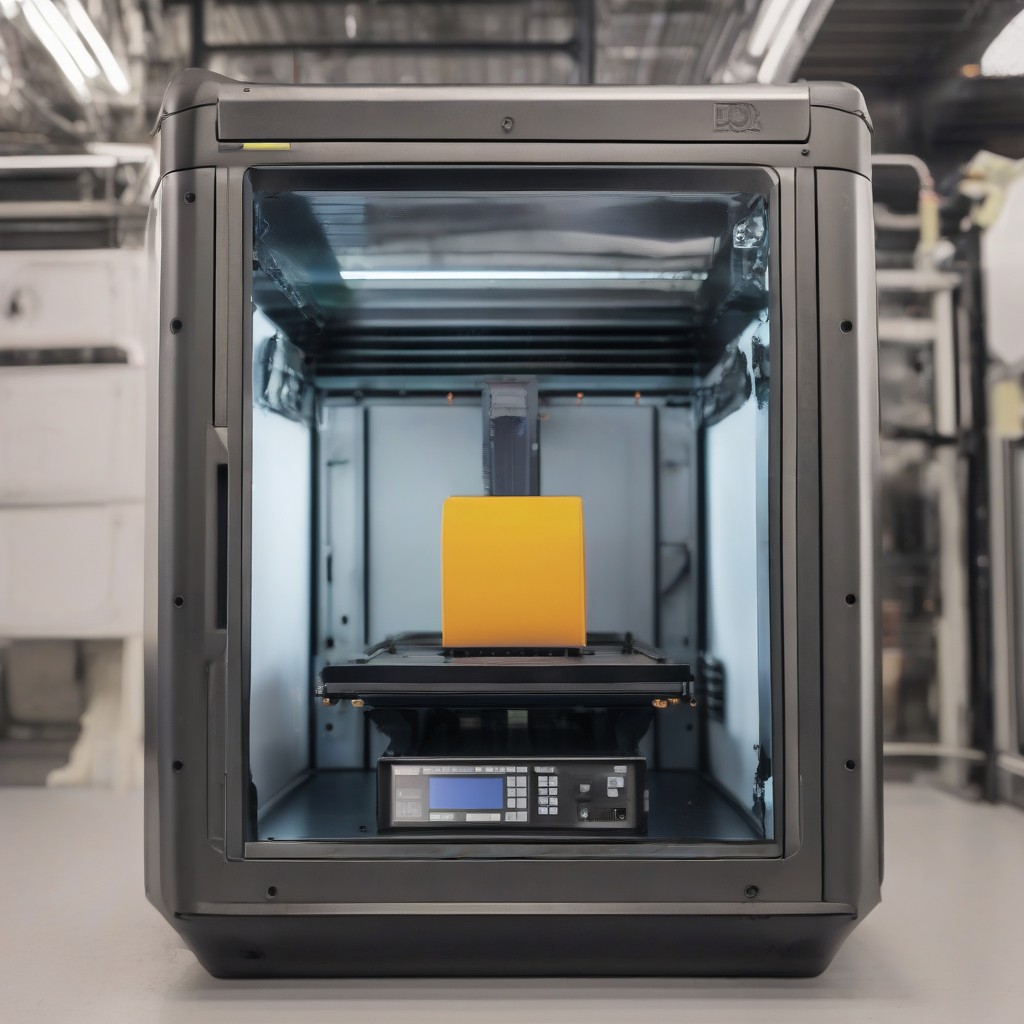
Not every 3D printer is built for the rigors of field deployment. A system designed for 3D printing drones on the battlefield in India must withstand dust, vibration, wide temperature swings, and unreliable power. In Autoabode's production trials with simulated desert and high-altitude conditions, we specified printers with IP54-rated enclosures, active particulate filtration, and vibration-dampened frames. The core requirement is a consistent build volume of at least 300 x 300 x 300 mm to accommodate most tactical UAV airframes and large components in one piece. A heated build chamber capable of maintaining 80°C is non-negotiable for printing high-strength engineering polymers like Nylon-CF or ABS, which are essential for structural parts. Power systems must be dual-mode, accepting both 220V AC from generators and 24V DC from vehicle batteries or solar arrays, with a total consumption under 1.5 kW to remain within field power unit limits.
Operational simplicity is another critical factor. The interface must be intuitive, requiring minimal training for a JCO or technician. Systems should feature onboard slicing software that can accept common 3D file formats (.STL, .3MF) and generate support structures automatically. In remote areas with limited connectivity, the ability to operate fully offline with pre-loaded digital inventories of parts is essential. Clients including DRDO report that printer calibration must be rapid and robust; a system that requires 30-minute leveling procedures after transport is unsuitable. Autoabode's recommended solution involves kinematic coupling mounts and automatic bed leveling sensors that ensure a first-layer success rate above 95% even after rough handling. This reliability directly translates to operational readiness, ensuring a damaged surveillance drone can be returned to the sky within a single duty cycle.
Autoabode's field trials with a prototype ruggedized FDM system demonstrated a 92% first-print success rate after simulated transport over 50km of rough terrain, a critical metric for tactical reliability.
- IP54 or higher ingress protection rating for dust and moisture resistance.
- Minimum build volume of 300 x 300 x 300 mm for printing complete UAV fuselage sections.
- Dual-input power system (220V AC / 24V DC) with under 1.5 kW peak draw.
- Active HEPA/charcoal filtration to contain ultrafine particles (UFP emissions < 1x10^11 particles/min).
- Onboard hardened computing with offline-capable slicing and a library of pre-qualified drone part files.
Material Science for Battlefield-Ready Components
From Filament to Flight-Worthy Part
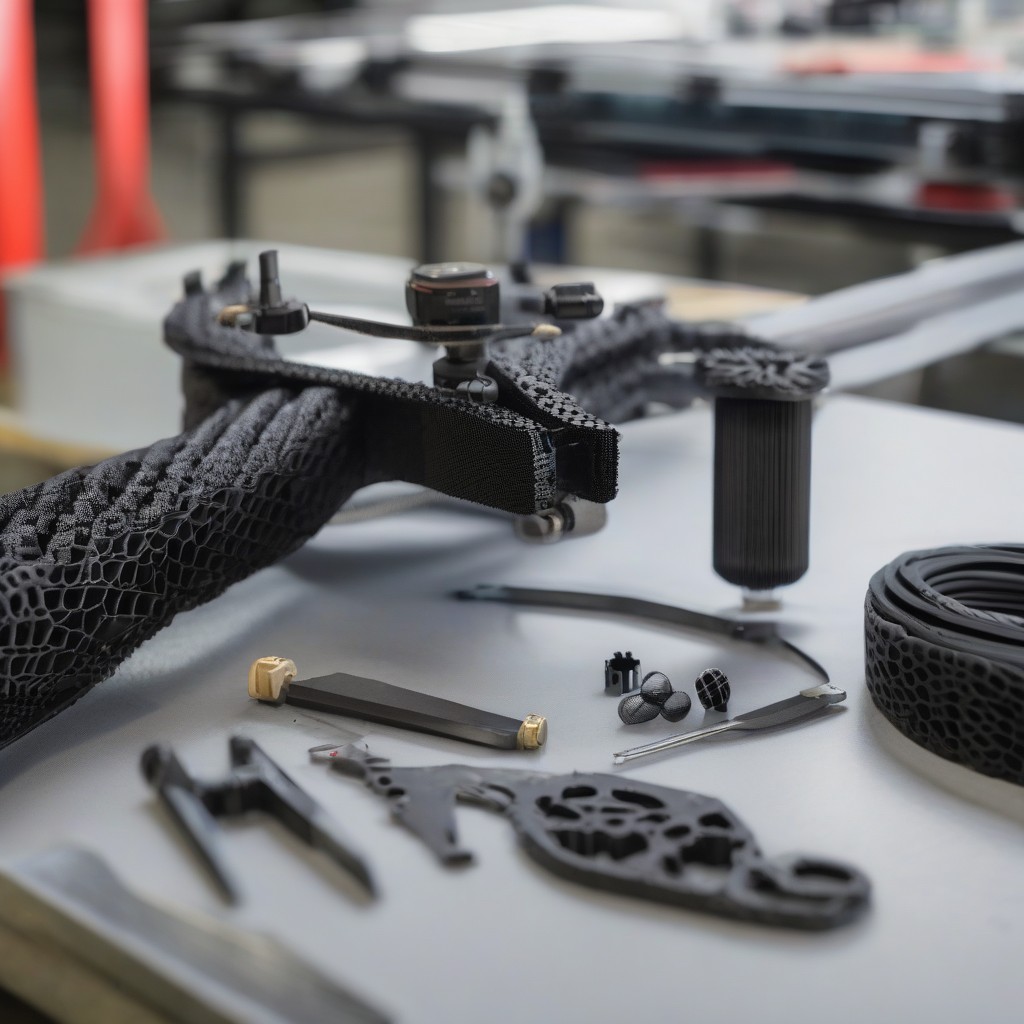
The polymers used in field-deployable 3D printing must bridge the gap between printability and performance. For non-critical, low-stress components like cable guides or antenna shrouds, standard PLA+ or PETG can suffice. However, for structural elements of a drone—such as motor mounts, arm joints, and landing gear—materials must exhibit high specific strength and fatigue resistance. Our engineers at Autoabode specify Nylon-based composites reinforced with carbon fiber (CF) or glass fiber (GF) as the primary tactical material. For instance, Nylon-CF offers a tensile strength of 85 MPa and a heat deflection temperature (HDT) of 150°C at 0.45 MPa, which is sufficient for components near motors and electronics. These materials are hygroscopic, so field deployment requires sealed, desiccant-filled storage containers and printer filament dryers integrated into the system to maintain moisture content below 0.1%.
Beyond strength, other material properties are tactically relevant. For reconnaissance drones operating in varied electromagnetic environments, components can be printed using filament doped with carbon nanotubes or other conductive additives to provide inherent EMI shielding, protecting sensitive payloads. For applications requiring radar absorption or signature reduction, specialized composite filaments with ferrite or other lossy dielectric materials can be employed. The key is a curated, limited material library. A forward unit cannot manage 20 different filaments. A streamlined inventory of 4-5 core materials—a tough PLA for prototypes, an ABS for durability, a Nylon-CF for structure, a TPU for gaskets, and a conductive composite—covers over 95% of anticipated needs. Each material must have a validated print profile stored on the printer, eliminating guesswork and ensuring consistent output from the Siachen Glacier to the Thar Desert.
Indian Defence Context and Autoabode Integration
The strategic imperative for indigenous, agile manufacturing is deeply embedded in India's defence policies, including the 'Make in India' initiative and the Defence Acquisition Procedure (DAP) 2020, which emphasizes design and development in India. Field-deployable 3D printing for drones aligns perfectly with these goals, reducing foreign dependency for critical spares and enabling rapid iteration of designs based on real-time feedback from the Line of Control or Eastern Command. The DGCA's UAS Rules 2021 further create a framework for the certification and operation of such indigenously manufactured systems. Autoabode is positioned at this nexus, developing solutions like the ruggedized Duper XL FDM series printer, which is engineered for mobile workshops, and the BotBit UAV series whose designs are optimized for additive manufacture. Our work with DRDO labs has focused on creating digital part inventories for legacy and next-gen systems, allowing a unit to download and print a certified replacement component on demand. This capability transforms logistics from a vulnerability into a tactical advantage, supporting sustained operations in contested environments.
Frequently Asked Questions
Q: What is the best 3D printer for making drone parts in the field?
A: The best 3D printer for field-based drone part manufacturing is a ruggedized FDM (Fused Deposition Modeling) system with a fully enclosed, temperature-controlled build chamber, an IP rating for dust/moisture, and dual-power capability. It should have a build volume of at least 300mm cubed to handle large components. Key features include automatic bed leveling, particulate filtration, and hardened components to withstand vibration. For Indian Army applications, systems must operate reliably in temperatures from 0°C to 45°C and humidity up to 80%. Autoabode's Duper XL FDM series is developed with these exact parameters, incorporating lessons from joint trials with defence partners to ensure tactical reliability and minimal maintenance burden for forward units.
Q: How strong are 3D printed drone parts compared to injection molded ones?
A: With the correct material and print parameters, 3D printed drone parts can achieve 80-95% of the strength of their injection-molded counterparts. The anisotropic nature of FDM printing means strength varies by layer orientation; parts are strongest along the X-Y plane (the print bed plane). Using advanced materials like carbon-fiber reinforced nylon (Nylon-CF), printed parts can reach tensile strengths of 80-90 MPa, which is sufficient for most structural UAV components like arms and mounts. The key is professional-grade printers that ensure excellent layer adhesion. For ultimate strength and isotropic properties, a field-deployable SinterX Pro SLS printer using nylon powders can produce parts that are virtually indistinguishable from molded ones, but FDM offers the best balance of strength, logistical simplicity, and cost for most forward applications.
Q: Can you 3D print an entire functional drone?
A: Yes, you can 3D print approximately 70-80% of a functional drone's airframe and structural components, including the fuselage, arms, motor mounts, landing gear, and payload bays. The remaining 20-30% consists of non-printable mission-critical items: the flight controller, motors, ESCs (Electronic Speed Controllers), batteries, radios, and sensors like cameras or LiDAR. The strategic value lies in printing the custom, mission-specific geometry that is unavailable through supply chains. For example, a unit can rapidly fabricate a specialized housing for a new sensor payload overnight. Complete 'print-and-fly' drone designs exist, but for tactical reliability, we recommend a hybrid approach: printing the custom airframe and using qualified, high-performance commercial off-the-shelf (COTS) components for propulsion and avionics, which can be stocked in a compact kit.
Q: Is 3D printing drones allowed under Indian military regulations?
A: 3D printing drones and components is fully permissible and actively encouraged under Indian defence regulations when integrated into the established logistics and certification framework. The Defence Acquisition Procedure (DAP) 2020 promotes indigenous design, development, and manufacturing. The process involves qualifying the digital design file, the printing process, and the final material properties for a specific part, much like qualifying a traditionally manufactured item. Once a part is qualified—a process Autoabode has undertaken with DRDO partners—it can be produced anywhere the certified digital file and qualified printer/material combination exist. This aligns with the DGCA's UAS Rules 2021, which govern unmanned aircraft systems. The key is that the end product, the drone, must comply with all operational and airworthiness standards, regardless of its manufacturing method. On-demand printing thus becomes a sanctioned tool within the authorised supply chain.
Field-deployable 3D printing is not a futuristic concept but an operational tool available today to enhance the self-reliance and tactical flexibility of Indian Army units. By mastering the technical specifications of ruggedized printers and tactical materials, units can create a resilient manufacturing node capable of responding to unforeseen challenges. This capability turns logistical constraints into opportunities for innovation, ensuring that UAV support remains continuous and adaptable. The convergence of robust hardware, qualified materials, and secure digital inventories creates a powerful force multiplier for any forward-deployed element. To explore certified systems and begin integrating this capability, review our defence-focused rapid prototyping services or contact Autoabode directly for a technical consultation tailored to unit requirements and operational environments.
Frequently Asked Questions
The best 3D printer for field-based drone part manufacturing is a ruggedized FDM (Fused Deposition Modeling) system with a fully enclosed, temperature-controlled build chamber, an IP rating for dust/moisture, and dual-power capability. It should have a build volume of at least 300mm cubed to handle large components. Key features include automatic bed leveling, particulate filtration, and hardened components to withstand vibration. For Indian Army applications, systems must operate reliably in temperatures from 0°C to 45°C and humidity up to 80%. Autoabode's Duper XL FDM series is developed with these exact parameters, incorporating lessons from joint trials with defence partners to ensure tactical reliability and minimal maintenance burden for forward units.
Col. (Retd.) Vikram Singh Rathore
Head of Defence Applications, Autoabode · Autoabode Consumer Electronics Pvt. Ltd.
Expert author at Autoabode — writing at the intersection of industrial 3D printing, defence manufacturing, and advanced UAV systems. Based in New Delhi, India.
Explore Autoabode's Platforms
This article is part of Autoabode's technical journal. Learn more about our core platforms built in India for defence, aerospace, medical and industrial teams:
More from the Journal
Off-Grid Communication Solutions for Mountainous Terrain: An Engineering Field Guide for India's High-Altitude Operators
Off-grid communication solutions for mountainous terrain are not optional in India — they are the difference between a coordinated operation and a stranded section. This engineering field guide breaks down the radio physics that defeats conventional VHF/UHF in the Himalayas, the mesh architectures that survive ridge-line shadowing, and the cold-weather, power-budget and security trade-offs that determine whether a system delivers in the Karakoram and Western Ghats. Built around real deployment data from Autoabode's MeshVani encrypted communicator and MeshVani Relay platform in service with the Indian Army, ITBP, NDRF and high-altitude expedition teams.
Drones & UAV · 7 min readModular UAV Payloads for Multi-Role Missions: A Technical Guide
Explore the technical specifications and strategic advantages of modular UAV payloads for multi-role missions. This guide covers hot-swap systems, sensor fusion, and real-world applications for defense and industry.