
Mastering PEEK: The Future of Aerospace Additive Manufacturing
Dr. Aris Thorne
Head of Materials Science, Autoabode R&D · Autoabode
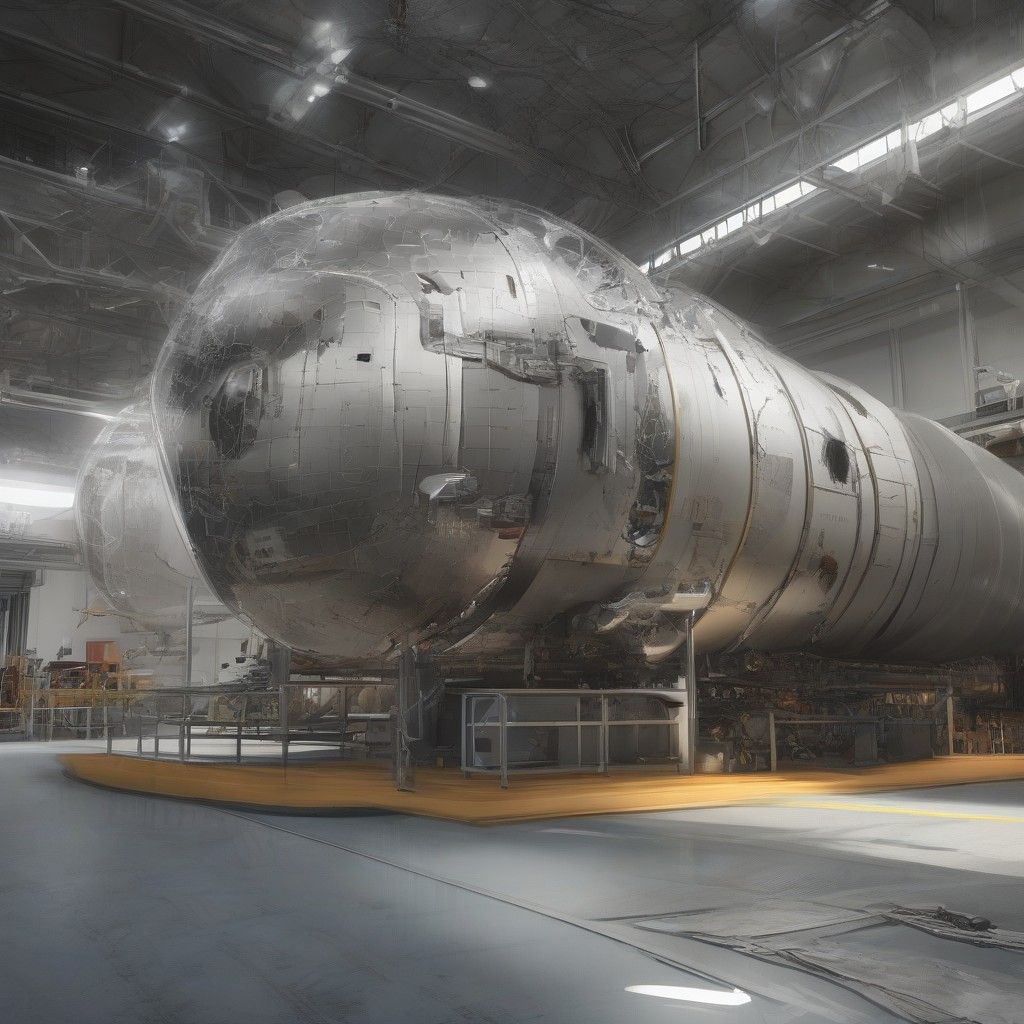
Polyether ether ketone — better known as PEEK — has quietly been staging a revolution in aerospace manufacturing. Once the exclusive domain of machined metal alloys, structural flight components are now being additively manufactured from this extraordinary semi-crystalline thermoplastic, achieving strength-to-weight ratios that challenge titanium and aluminium at a fraction of the cost and lead time.
Why PEEK Changes Everything
PEEK's mechanical profile is extraordinary. With a tensile strength exceeding 100 MPa, a continuous use temperature of 260°C, and near-zero moisture absorption, it outperforms most engineering thermoplastics in environments that would cause immediate failure in standard polymers. Its chemical resistance to aviation hydraulic fluids, fuels, and de-icing agents makes it a natural fit for airframe components previously held to be exclusively metallic territory.
The critical breakthrough has been in FDM processing. First-generation PEEK printers struggled with crystallinity control — improper cooling would leave the polymer in an amorphous state that sacrificed up to 40% of its potential mechanical properties. Modern industrial FDM systems, including Autoabode's Duper AI and Duper XL series, incorporate precision-controlled heated chambers (80–160°C) and slow-cooling protocols that achieve controlled crystallinity above 30%, unlocking the material's true structural performance.
Aerospace Applications: Where PEEK Is Taking Over
Turbine Housing & Nacelle Components
Engine nacelles must withstand continuous temperatures from friction and proximity to combustion while remaining as light as possible. PEEK composite structures — reinforced with short carbon fibre at 10–30% fill — match the thermal and mechanical requirements at 60% less mass than aluminium equivalents, reducing fuel consumption over a fleet lifecycle.
Interior Ducting and Brackets
Aircraft interior components must satisfy cabin fire, smoke, and toxicity (FST) standards. Carbon-filled PEEK meets FAR 25.853 requirements straight off the build plate, eliminating the post-processing steps required for ULTEM 9085, previously the industry standard. For complex ducting geometries with internal channels, FDM's design freedom creates what casting cannot.
Satellite and Space Applications
In low Earth orbit, material outgassing can fog sensitive optics. PEEK's outgassing rate in vacuum (TML < 0.1%) is compliant with NASA ASTM E595 requirements, making it a candidate for structural brackets on Earth observation satellites — increasingly printed on demand rather than stocked and shipped.
Autoabode's Duper XL 500 achieves a maximum nozzle temperature of 500°C, capable of processing PEEK, PEKK, and PEI/ULTEM 9085 without degradation.
The ULTEM 9085 Bridge
While PEEK represents the performance peak, ULTEM 9085 — a polyetherimide — operates as the workhorse of certified aerospace FDM. It holds true FAA NCAMP certification datasets, enabling flight-qualified part production from printed stock. Autoabode partners with tier-1 aerospace suppliers using its FDM ecosystem to produce ULTEM 9085 brackets, jig components, and interior panels for commercial aircraft programs.
Processing Challenges and How We Solve Them
- Nozzle temperature: PEEK requires 370–420°C extrusion, demanding hardened stainless or ruby-tipped nozzles.
- Bed adhesion: Glasstape or PEI film at 120°C prevents warping of high-rigidity crystalline structures.
- Enclosure temperature: Heated chambers above 80°C prevent inter-layer cracking from thermal shock.
- Moisture control: Pre-drying PEEK filament at 150°C for 6 hours removes absorbed moisture that causes porosity.
- Post-processing: Annealing at 200°C for 2 hours after printing relieves residual stress and further increases crystallinity.
The Roadmap Ahead
PEEK composite filaments reinforced with continuous carbon fibre (CCF) represent the next frontier. Systems capable of co-depositing continuous fibre alongside a PEEK matrix are beginning to emerge, promising printed parts with specific stiffness values rivalling aluminium 6061. At Autoabode, we are actively running qualification trials on PEEK-CF compounds across our Duper XL lineup. The results — measured in ultimate tensile strength, interlaminar shear, and fatigue life — are consistently outperforming legacy material benchmarks set a decade ago.
Dr. Aris Thorne
Head of Materials Science, Autoabode R&D · Autoabode Consumer Electronics Pvt. Ltd.
Expert author at Autoabode — writing at the intersection of industrial 3D printing, defence manufacturing, and advanced UAV systems. Based in New Delhi, India.
Explore Autoabode's Platforms
This article is part of Autoabode's technical journal. Learn more about our core platforms built in India for defence, aerospace, medical and industrial teams:
More from the Journal
Off-Grid Communication Solutions for Mountainous Terrain: An Engineering Field Guide for India's High-Altitude Operators
Off-grid communication solutions for mountainous terrain are not optional in India — they are the difference between a coordinated operation and a stranded section. This engineering field guide breaks down the radio physics that defeats conventional VHF/UHF in the Himalayas, the mesh architectures that survive ridge-line shadowing, and the cold-weather, power-budget and security trade-offs that determine whether a system delivers in the Karakoram and Western Ghats. Built around real deployment data from Autoabode's MeshVani encrypted communicator and MeshVani Relay platform in service with the Indian Army, ITBP, NDRF and high-altitude expedition teams.
Drones & UAV · 7 min readModular UAV Payloads for Multi-Role Missions: A Technical Guide
Explore the technical specifications and strategic advantages of modular UAV payloads for multi-role missions. This guide covers hot-swap systems, sensor fusion, and real-world applications for defense and industry.