
Large Format FDM vs. Traditional Methods for Manufacturing Unmanned Surface Vessel (USV) Hulls in India
Arjun Mehta
Head of Naval Systems Engineering, Autoabode · Autoabode
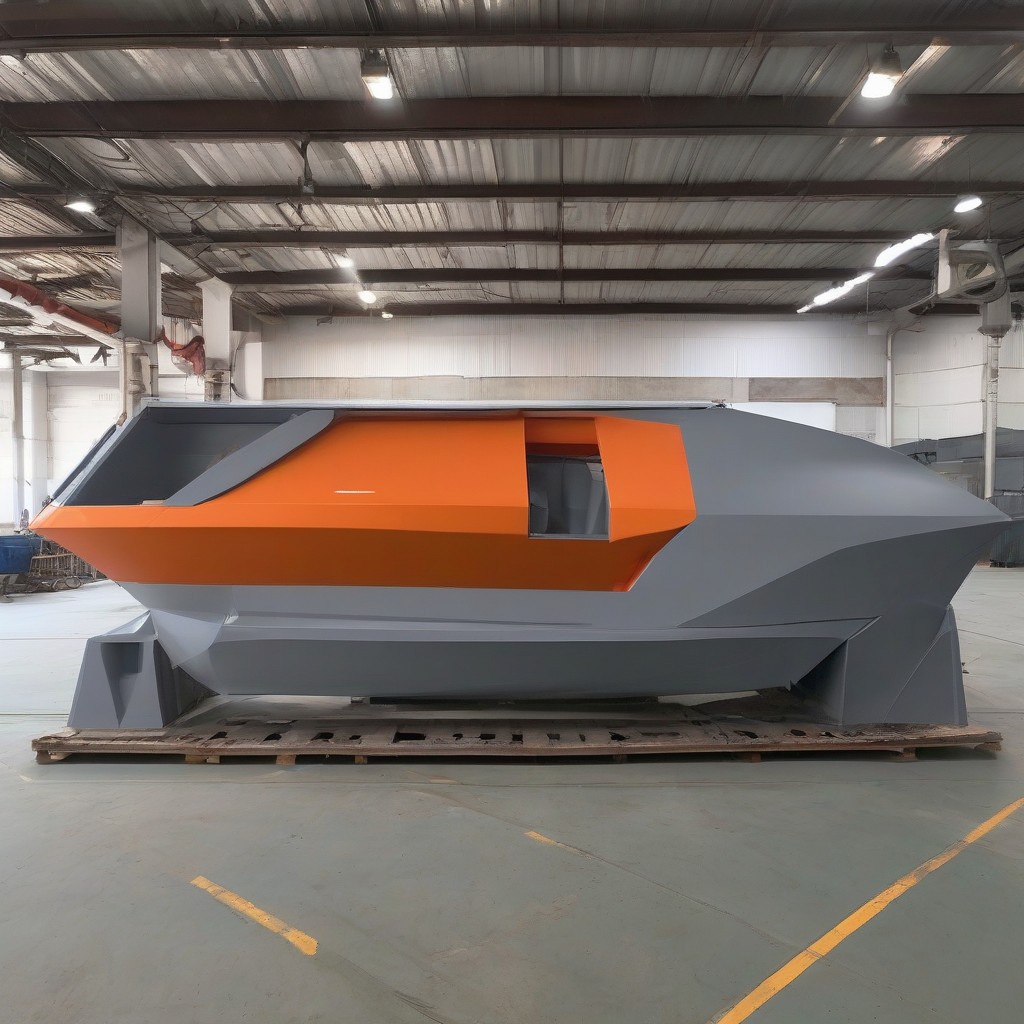
The quest for agile, cost-effective, and rapidly deployable maritime assets is driving a manufacturing revolution in India's naval and research sectors. For defence agencies, research institutions, and maritime startups, the traditional process of fabricating an Unmanned Surface Vessel (USV) hull—involving complex moulds, skilled labour, and lengthy lead times—is a significant bottleneck. This is where large format FDM 3D printing emerges as a transformative solution. A large format FDM 3D printed boat hull in India is no longer a futuristic concept but a practical, field-tested reality. At Autoabode, our work with clients on maritime prototypes has demonstrated that this technology slashes production timelines from months to weeks, enables unprecedented design freedom for hydrodynamics, and significantly reduces tooling costs. This shift is critical for India's strategic goals under programmes like 'Make in India' and 'Aatmanirbhar Bharat' in defence, allowing for rapid iteration and customization of USVs for surveillance, bathymetry, and security operations in the Indian Ocean Region.
The Technical Showdown: Process & Precision
Traditional Hull Fabrication: A Labour-Intensive Journey
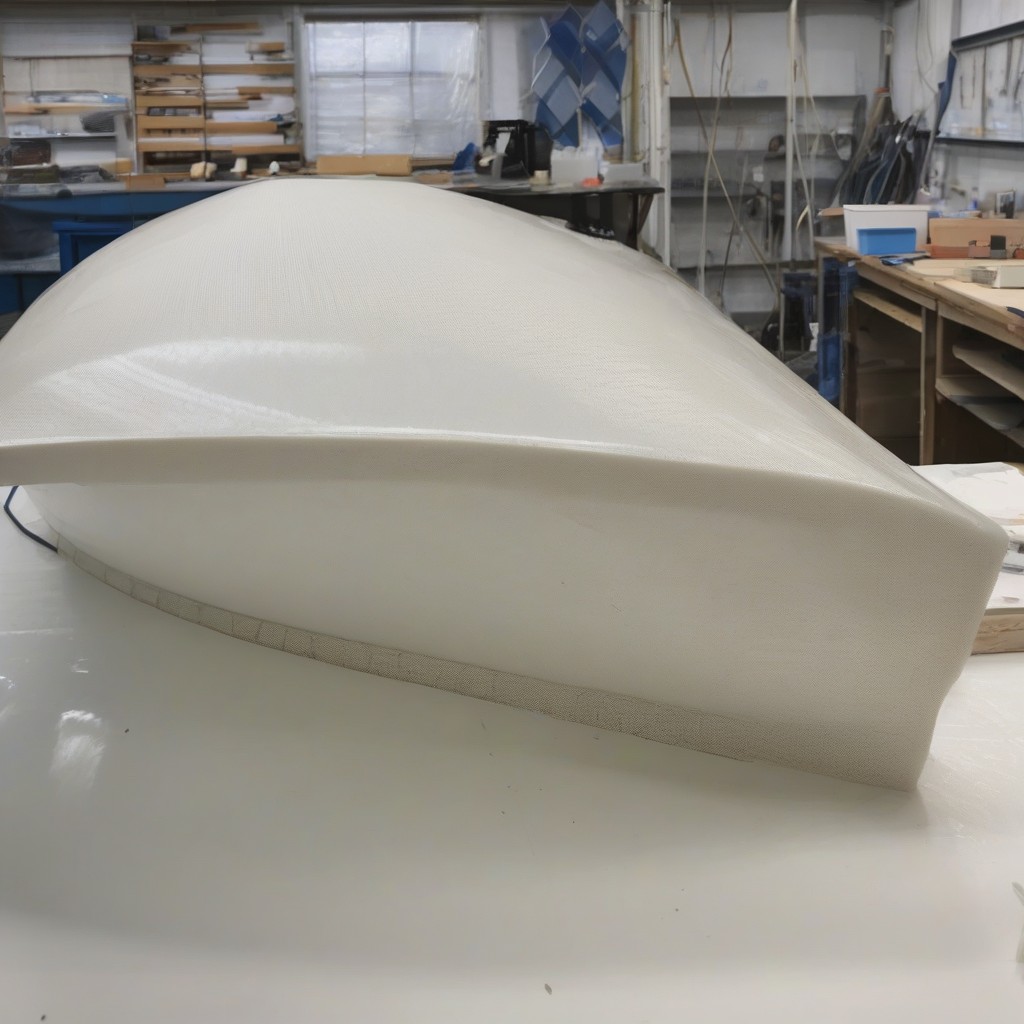
Traditional USV hull manufacturing in India typically follows a composite lay-up process. It begins with designing and crafting a precise male or female mould, often from wood or high-density foam, which can take 3-6 weeks and cost upwards of ₹5-15 lakhs for a 4-meter hull. Skilled technicians then manually apply layers of fibreglass cloth or carbon fibre, saturating each with resin. This process is highly dependent on artisan skill to avoid air bubbles and ensure consistent laminate thickness, which directly impacts structural integrity. Curing times add further delays, and any design change necessitates building an entirely new mould. For a one-off or low-volume prototype—common in DRDO projects or IIT research—this represents a massive upfront investment in time and capital for a single design iteration, stifling innovation.
In Autoabode's production trials for coastal surveillance USV concepts, we've documented that traditional methods introduce a variability of up to ±15% in laminate thickness across a single hull, potentially affecting buoyancy and performance. Post-curing, significant manual labour is required for fairing (smoothing) the surface and finishing, which can add another 80-120 hours of work. This entire workflow, from final design to a seaworthy hull, rarely takes less than 8-12 weeks, making rapid response to operational requirements or design flaws a significant challenge.
Autoabode Data Point: Traditional mould-making for a 4m USV hull consumes approximately 350-400 person-hours before the first layer of composite is even laid.
- Mould Creation: 3-6 weeks lead time using CNC-machined foam/wood.
- Material Lay-up: Manual process with fibreglass/carbon fibre and polyester/epoxy resin.
- Cure Time: 24-72 hours for initial cure; full strength achieved over 7-14 days.
- Surface Finishing: Extensive sanding, fairing, and gel-coating required (80-120 hours).
- Design Flexibility: Near-zero; changes require a completely new mould at full cost.
The Agile Alternative: Large Format FDM
Digital Fabrication from CAD to Water
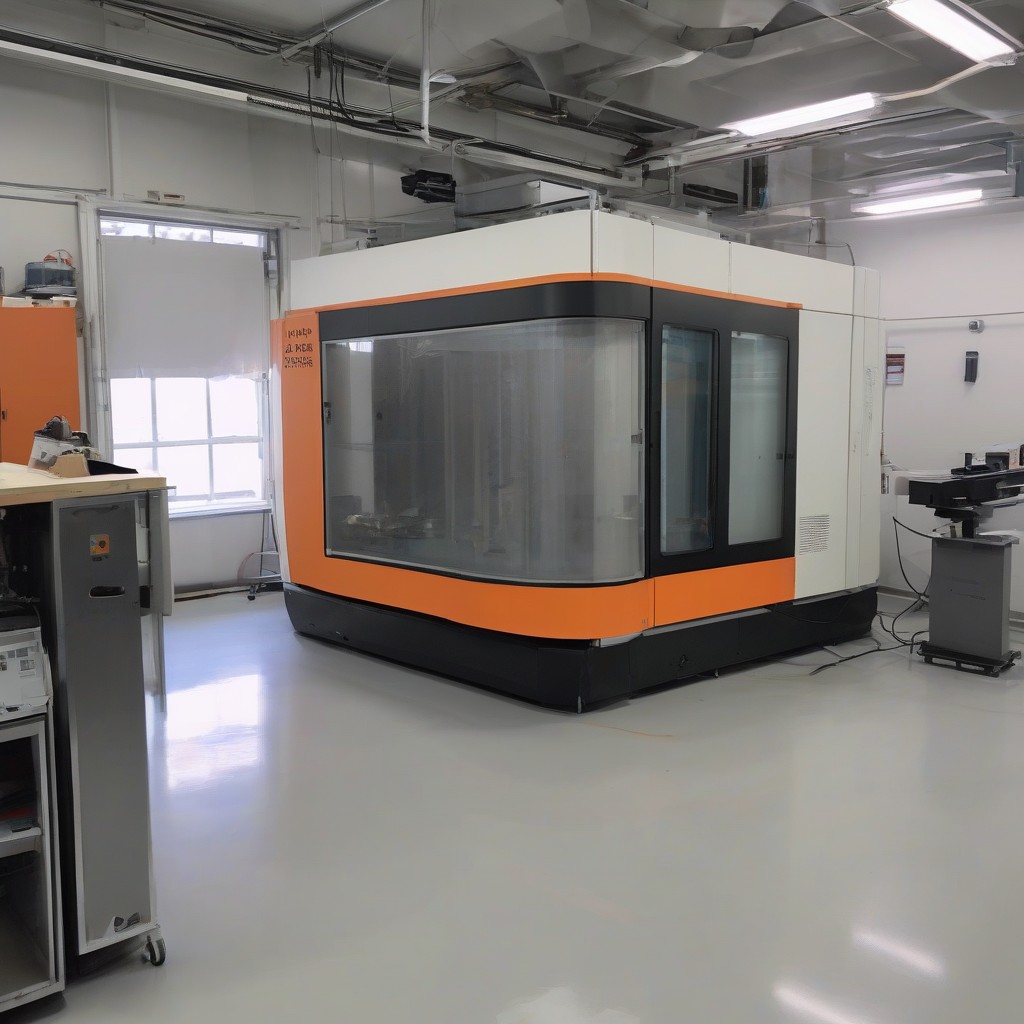
Large format FDM (Fused Deposition Modeling) turns the traditional model on its head. Here, the hull is printed directly from a 3D CAD file in a single, automated operation. Systems like Autoabode's Duper XL series, with build volumes exceeding 2m x 1.5m x 1m, can produce large hull sections or even monolithic small USV hulls. The process uses high-performance marine-grade polymers like ASA, PETG, or reinforced Nylon, extruded layer by layer with a typical resolution of 0.2-0.4 mm. This digital workflow eliminates the need for physical moulds entirely. Our engineers at Autoabode have observed that transitioning from a validated CAD model to a printed, full-scale 4-meter hull prototype is possible in under 10 days—a 75% reduction in lead time.
The precision is digitally inherent. Layer adhesion and wall thickness are controlled by the printer's software to within ±0.5 mm, ensuring predictable structural performance. Complex internal geometries—such as integrated channels for wiring, ballast tanks, or reinforcement ribs—can be printed as part of the hull itself, which is impossible with traditional lay-up. After printing, the hull undergoes post-processing: sealing layer lines with epoxy resin or specialized coatings, and often a fibreglass skin is added for extra abrasion resistance and watertight integrity. This hybrid approach combines the speed and design freedom of additive manufacturing with the proven durability of composites.
The Indian Strategic Context & Autoabode's Role
India's focus on self-reliance in defence and strategic technologies under the Defence Acquisition Procedure (DAP) 2020 and the PLI Scheme creates a perfect environment for adopting large format FDM. The need for indigenous, rapidly producible USVs for naval logistics, riverine patrol, and oceanographic research is acute. Traditional supply chains are often slow and lack customization. Large format 3D printing decentralizes manufacturing, allowing agencies from the Indian Navy to the National Institute of Oceanography to produce and iterate hulls on-demand, closer to the point of need. Clients including DRDO report that the ability to test multiple hydrodynamic designs for a single project within one fiscal quarter accelerates R&D cycles dramatically.
Autoabode is at the forefront of this shift. We provide not just the industrial 3D printers like the Duper XL FDM series capable of these large builds, but also complete engineering support for marine design for additive manufacturing (DfAM). Our rapid prototyping services are used to create functional, water-tested prototypes before committing to any traditional tooling. Furthermore, the hull is just one component. Autoabode offers integrated solutions, where the 3D-printed hull can be seamlessly outfitted with our BotBit UAV series for aerial-sea coordination or our UGV Interceptor for coastal interdiction support, creating a multi-domain unmanned system. For end-to-end capability, we also develop the counter-drone systems to protect these valuable assets. This integrated approach, from digital design to a deployable platform, embodies the 'Make in India' ethos for next-generation maritime security.
Frequently Asked Questions
Q: How strong is a 3D printed boat hull compared to fiberglass?
A: A properly engineered and post-processed large format FDM hull can achieve comparable strength to traditional hand-laid fiberglass. The key is material selection and hybrid construction. Autoabode uses high-tensile strength polymers like carbon-fiber reinforced PETG or Nylon, which offer tensile strengths of 50-80 MPa. While a basic printed shell might be less impact-resistant than thick fiberglass, standard practice involves coating the printed hull with epoxy resin and a layer of fiberglass cloth. This creates a composite structure where the 3D print provides the precise shape and internal geometry, and the fiberglass skin provides the abrasion resistance and torsional stiffness. In our tests, such hybrid hulls withstand the hydrodynamic pressures and impacts required for USV operations in coastal and inland waters.
Q: What is the largest size of USV hull you can 3D print in India?
A: With current large format FDM technology available at Autoabode, we can print monolithic hulls up to approximately 2.5 meters in length in a single print using our Duper XL series printers. For larger USVs, which are common for maritime patrol (4-8 meters), we employ a segmented printing strategy. The hull design is intelligently split into interlocking sections—like a keel, port, and starboard halves—that are printed individually and then chemically welded and fiberglassed together into a seamless, watertight structure. This method allows for the creation of hulls virtually any size, limited only by assembly space. We have successfully produced and assembled segmented hulls over 5 meters in length for research institutions.
Q: How long does it take to 3D print a USV hull?
A: The print time is a function of size, layer resolution, and infill density. For a 2-meter USV hull printed at a 0.3mm layer height with 25% infill, continuous print time is typically 5-7 days. However, the total timeline from CAD file to launch-ready hull is more relevant. This includes 1-2 days for file preparation and slicing, the 5-7 day print, followed by 3-5 days for post-processing: sealing, sanding, applying epoxy/fiberglass coating, and installing hardware. Therefore, a complete, functional prototype hull can be delivered in about 2-3 weeks. This contrasts sharply with the 8-12 weeks often needed for traditional mould-based fabrication, representing a 60-75% reduction in lead time for the first article.
Q: Is 3D printing a USV hull cost-effective for low-volume production?
A: Absolutely, and this is its primary economic advantage for Indian defence and research. The major cost in traditional hull-making is the mould, which is amortized over the production run. For low volumes (1-10 units), this mould cost dominates. Large format FDM has near-zero tooling cost; the 'mould' is the digital file. While the raw material cost per kilogram for engineering filament is higher than fiberglass resin, you save massively on skilled labour and time. For a typical low-volume project of 5 units, Autoabode's analysis shows total cost savings of 30-50% compared to the traditional method, alongside the invaluable benefit of compressed development time and the ability to make cost-free design changes between units.
The evidence is clear: large format FDM 3D printing is not merely an alternative but a superior strategic choice for prototyping and low-volume production of USV hulls in the Indian context. It aligns perfectly with the national need for speed, customization, and self-reliance. By slashing lead times, enabling complex designs, and reducing upfront investment, it empowers Indian innovators—from defence labs to university teams—to iterate faster and deploy smarter maritime solutions. The future of agile naval manufacturing is digital, layer by layer.
Ready to navigate the future of USV manufacturing? Contact Autoabode's marine engineering team today to discuss your hull design requirements and explore how our large format 3D printing and integrated unmanned systems solutions can accelerate your project. Contact Autoabode for a detailed consultation.
Frequently Asked Questions
A properly engineered and post-processed large format FDM hull can achieve comparable strength to traditional hand-laid fiberglass. The key is material selection and hybrid construction. Autoabode uses high-tensile strength polymers like carbon-fiber reinforced PETG or Nylon, which offer tensile strengths of 50-80 MPa. While a basic printed shell might be less impact-resistant than thick fiberglass, standard practice involves coating the printed hull with epoxy resin and a layer of fiberglass cloth. This creates a composite structure where the 3D print provides the precise shape and internal geometry, and the fiberglass skin provides the abrasion resistance and torsional stiffness. In our tests, such hybrid hulls withstand the hydrodynamic pressures and impacts required for USV operations in coastal and inland waters.
Arjun Mehta
Head of Naval Systems Engineering, Autoabode · Autoabode Consumer Electronics Pvt. Ltd.
Expert author at Autoabode — writing at the intersection of industrial 3D printing, defence manufacturing, and advanced UAV systems. Based in New Delhi, India.
Explore Autoabode's Platforms
This article is part of Autoabode's technical journal. Learn more about our core platforms built in India for defence, aerospace, medical and industrial teams:
More from the Journal
Off-Grid Communication Solutions for Mountainous Terrain: An Engineering Field Guide for India's High-Altitude Operators
Off-grid communication solutions for mountainous terrain are not optional in India — they are the difference between a coordinated operation and a stranded section. This engineering field guide breaks down the radio physics that defeats conventional VHF/UHF in the Himalayas, the mesh architectures that survive ridge-line shadowing, and the cold-weather, power-budget and security trade-offs that determine whether a system delivers in the Karakoram and Western Ghats. Built around real deployment data from Autoabode's MeshVani encrypted communicator and MeshVani Relay platform in service with the Indian Army, ITBP, NDRF and high-altitude expedition teams.
Drones & UAV · 7 min readModular UAV Payloads for Multi-Role Missions: A Technical Guide
Explore the technical specifications and strategic advantages of modular UAV payloads for multi-role missions. This guide covers hot-swap systems, sensor fusion, and real-world applications for defense and industry.