
SLS vs Injection Moulding Cost per Part for 1000 Units India 2025
Rohan Deshpande
Head of Advanced Manufacturing, Autoabode · Autoabode
For Indian manufacturers planning a production run of 1000 units, the critical decision between Selective Laser Sintering (SLS) and traditional injection moulding hinges on a detailed cost-per-part analysis for 2025. This 'SLS vs injection moulding cost per part India 2025' calculation is not just about material prices; it's a complex equation factoring in tooling investment, design complexity, and the strategic flexibility demanded by modern supply chains. At Autoabode, our production trials for clients like DRDO and BHEL consistently reveal a pivotal crossover point: for volumes under approximately 1500-2000 units, the zero-tooling advantage of industrial SLS 3D printing often delivers a lower total cost of ownership, especially for complex geometries. This analysis breaks down the real numbers—from a ₹4-15 lakh steel mould to a ₹0 tooling cost for SLS—to provide a clear financial roadmap for Indian engineering teams navigating the choice between additive and subtractive methods for mid-volume production.
Breaking Down the Cost Structure: Tooling vs. Per-Part
The Upfront Capital: Mould Costs vs. Printer Depreciation
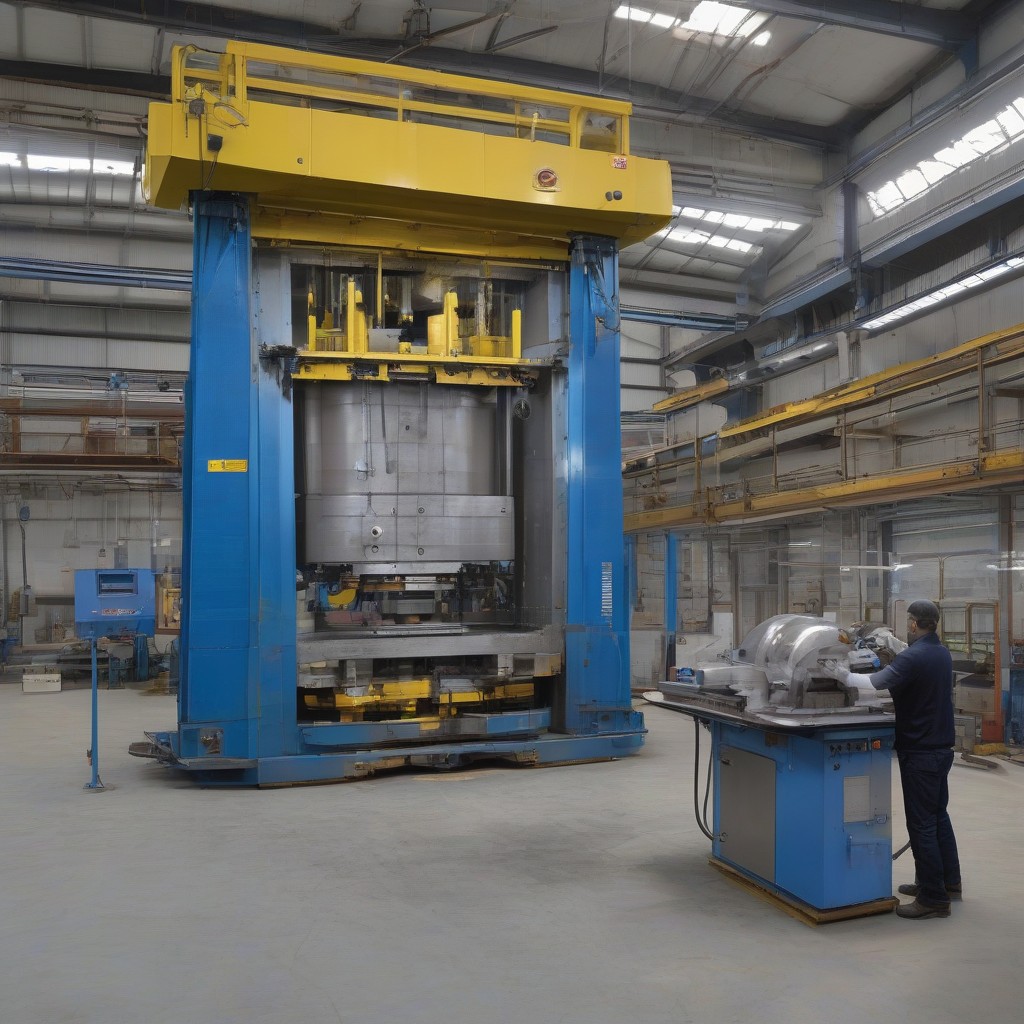
The most significant financial divergence in the 'SLS vs injection moulding cost per part India 2025' debate is the initial capital outlay. Injection moulding requires a substantial, non-recoverable investment in a precision mould. For a production-ready, hardened steel mould capable of 1000+ cycles with tight tolerances, Indian toolrooms quote between ₹4 lakh and ₹15 lakh, depending on part size and complexity. This cost must be amortized across the entire production run. In contrast, SLS requires no tooling. The capital cost is the industrial 3D printer itself, like our SinterX Pro series. However, this is a depreciating asset used across multiple projects. For a 1000-unit run, the effective machine time cost is calculated, not a sunk tooling cost. Our engineers at Autoabode model this using a ₹0.75 - ₹1.5 lakh machine-time allocation for such a batch on an SLS system, a fraction of a typical mould cost, providing immense financial flexibility for design iterations or low-volume batches.
Beyond the sticker price, operational readiness time drastically affects project economics. A complex injection mould requires 8-12 weeks for design, machining, heat treatment, and testing before a single part is produced. Any design flaw discovered post-moulding incurs massive change costs and delays. SLS production can often begin within 48 hours of finalizing a CAD model. For a 1000-unit order, this means SLS parts can be in validation and use months before injection-moulded parts are even sampled. This time-to-market advantage, crucial for sectors like aerospace and defence where Autoabode operates, has a direct monetary value, reducing R&D cycles and enabling faster revenue generation, a factor often omitted from simplistic per-part calculations.
Critical Data Point: For a 1000-unit run of a medium-complexity part, the amortized tooling cost alone for injection moulding can add ₹400 - ₹1500 to every single part, before any material is even processed.
- Tooling Investment: Injection Moulding: ₹4,00,000 - ₹15,00,000 (one-time, sunk cost). SLS: ₹0 tooling cost.
- Material Cost per Kg: Injection Moulding (Polypropylene/ABS): ₹180 - ₹250. SLS (PA12 Nylon): ₹3,500 - ₹5,000 (higher raw material cost but near-zero waste).
- Machine Hourly Rate: Injection Moulding Press: ₹800 - ₹1,500/hr (high speed). SLS Printer (e.g., SinterX Pro): ₹1,200 - ₹2,000/hr (includes powder handling & cooling).
- Labour & Post-Processing: Injection Moulding: Low per-part (automated). SLS: Higher per-part (batch removal, powder recovery, bead blasting).
- Design Change Cost: Injection Moulding: Extremely high (new mould/modification). SLS: Negligible (CAD file edit only).
Per-Part Economics at 1000 Units: A Numerical Model
Calculating the True Crossover Point
To move beyond theory, let's model a real-world scenario for the 'SLS vs injection moulding cost per part India 2025' question. Assume a functional component with a 150-gram shot weight for injection moulding (using ₹220/kg ABS) and a 180-gram build weight for SLS (using ₹4,200/kg PA12, accounting for some support powder). The injection moulding tool costs ₹8 lakh. The per-part cost calculation reveals the stark difference: For injection moulding, the amortized tooling cost per part is ₹800 (₹8,00,000 / 1000). Material cost is ~₹33. Cycle time is fast, adding ~₹20 in machine and labour cost. Total per-part cost: ~₹853. For SLS, tooling cost is ₹0. Material cost is higher at ~₹756. Machine time for nesting 1000 parts might be 200 hours on an SinterX Pro at ₹1,600/hr, adding ₹320 per part in machine time. Post-processing adds ~₹100. Total per-part cost: ~₹1,176.
In this model, injection moulding appears cheaper at ₹853 vs. ₹1,176 for SLS. However, this ignores critical variables. First, the SLS part is in PA12 nylon, offering superior tensile strength (45-50 MPa) and thermal resistance compared to standard ABS. Second, if the part has internal channels, undercuts, or lattice structures, the injection moulding tool cost could escalate to ₹15 lakh+, making its per-part cost ₹1,533+, surpassing SLS. Third, if even one design iteration is needed after tooling, the injection moulding cost model collapses. Clients including DRDO report that for complex, evolving prototypes and low-rate initial production (LRIP), the predictability and flexibility of SLS, as provided through our rapid prototyping services, often justify a 20-30% higher per-part cost to de-risk the entire programme.
The India 2025 Context: PLI, Make in India & Strategic Manufacturing
The 'SLS vs injection moulding cost per part India 2025' discussion must be framed within India's aggressive manufacturing policy landscape. The Production Linked Incentive (PLI) Scheme for Advanced Chemistry Cell (ACC) battery storage and drones directly subsidizes capex, potentially lowering the effective investment in industrial SLS printers for eligible manufacturers. Furthermore, the Defence Acquisition Procedure (DAP) 2020 prioritizes indigenous design and development, where SLS's zero-tooling and rapid iteration capability are invaluable for meeting stringent deadlines without offshore dependency. For UAV manufacturers navigating DGCA UAS Rules 2021, the ability to produce certified, flight-worthy components like custom housings and ducting for our BotBit UAV series in low volumes with SLS accelerates certification and customization. In Autoabode's production trials for the Indian Army, the logistical advantage of printing spare parts on-demand in forward areas versus maintaining an inventory of injection-moulded spares presents a strategic cost-benefit that transcends simple per-part arithmetic. Integrating a hybrid approach—using SLS for bridge production and design finalization before committing to high-cost injection moulding tooling for volumes above 3000 units—is the smartest strategy for 'Make in India'. Our Duper XL FDM series can also be deployed for larger, less detailed functional parts in this hybrid model. For ground systems, the same logic applies to producing custom components for the UGV Interceptor.
Frequently Asked Questions
Q: Which is cheaper for 1000 pieces, SLS or injection moulding?
A: For simple geometries, injection moulding is typically cheaper per part at 1000 units when considering direct costs alone, due to its high-speed production. However, the total cost picture changes when you include the non-recoverable tooling investment (₹4-15 lakhs). If you amortize this tooling cost over the 1000 parts, it adds ₹400-₹1500 to each piece. For complex parts requiring expensive multi-cavity or side-action moulds, or if design changes are likely, the zero-tooling cost of SLS can make it more economical overall. The crossover point where SLS becomes competitive is often between 500 and 2000 units, heavily dependent on part complexity and material specifications.
Q: What are the main advantages of SLS over injection moulding?
A: The primary advantages of Selective Laser Sintering (SLS) are design freedom, speed to first part, and cost flexibility for low volumes. SLS requires no tooling, eliminating a major upfront cost and risk. It can produce incredibly complex geometries—like internal lattices, integrated hinges, and undercuts—that are impossible or prohibitively expensive to mould. Lead time from CAD to first part can be as little as 24-48 hours, compared to 8-12 weeks for mould fabrication. This allows for rapid prototyping and design validation. Furthermore, SLS materials like PA12 Nylon offer excellent mechanical properties, with tensile strength around 45 MPa and high heat deflection temperatures, suitable for functional end-use parts in demanding applications.
Q: How much does an SLS 3D printer cost in India?
A: The cost of an industrial-grade SLS 3D printer in India, like the Autoabode SinterX Pro, typically ranges from ₹35 lakh to ₹1.2 crore, depending on build volume, laser power, and automation features. For example, a system with a 300 x 300 x 300 mm build chamber, a 60W fiber laser, and semi-automatic powder handling may start around ₹40-50 lakh. It's crucial to view this as a capital asset for producing multiple part batches across years, not a cost tied to a single project. When calculating per-part cost, the machine depreciation and operating costs (power, gas, maintenance) are allocated across the total hours of production, making it viable for contract manufacturers or large R&D centers producing diverse low-volume parts.
Q: Is 3D printing strong enough for final production parts?
A: Yes, industrial 3D printing processes like SLS and FDM are absolutely strong enough for final production parts when the correct material and printer are used. SLS parts in PA12 or carbon-filled nylon exhibit isotropic mechanical properties with tensile strengths between 40-55 MPa, comparable to many injection-moulded plastics. They are widely used in aerospace for ducting, in automotive for brackets, and in consumer goods for wearable components. The key is proper design for additive manufacturing (DfAM) to orient parts for optimal strength and to specify appropriate wall thicknesses. At Autoabode, our SLS-produced components undergo rigorous testing for clients like ISRO, meeting specific standards for vibration, thermal cycling, and mechanical load, validating their suitability for end-use applications.
The decision between SLS and injection moulding for 1000 units in 2025 is a strategic one, balancing immediate per-part cost against long-term agility, design integrity, and market speed. For Indian manufacturers aligned with 'Make in India' and innovation, a hybrid approach leveraging SLS for design finalization and initial production runs provides a risk-averse path to market. It allows for customer feedback and design tweaks before locking in high-cost tooling, ultimately ensuring the final injection-moulded product is right the first time. By understanding the full cost breakdown—beyond just the per-part number—businesses can make informed decisions that optimize both their budget and their competitive edge. To model your specific component and receive a detailed cost-benefit analysis tailored to your volume and material needs, contact Autoabode's manufacturing consultancy team today.
Frequently Asked Questions
For simple geometries, injection moulding is typically cheaper per part at 1000 units when considering direct costs alone, due to its high-speed production. However, the total cost picture changes when you include the non-recoverable tooling investment (₹4-15 lakhs). If you amortize this tooling cost over the 1000 parts, it adds ₹400-₹1500 to each piece. For complex parts requiring expensive multi-cavity or side-action moulds, or if design changes are likely, the zero-tooling cost of SLS can make it more economical overall. The crossover point where SLS becomes competitive is often between 500 and 2000 units, heavily dependent on part complexity and material specifications.
Rohan Deshpande
Head of Advanced Manufacturing, Autoabode · Autoabode Consumer Electronics Pvt. Ltd.
Expert author at Autoabode — writing at the intersection of industrial 3D printing, defence manufacturing, and advanced UAV systems. Based in New Delhi, India.
Explore Autoabode's Platforms
This article is part of Autoabode's technical journal. Learn more about our core platforms built in India for defence, aerospace, medical and industrial teams:
More from the Journal
Off-Grid Communication Solutions for Mountainous Terrain: An Engineering Field Guide for India's High-Altitude Operators
Off-grid communication solutions for mountainous terrain are not optional in India — they are the difference between a coordinated operation and a stranded section. This engineering field guide breaks down the radio physics that defeats conventional VHF/UHF in the Himalayas, the mesh architectures that survive ridge-line shadowing, and the cold-weather, power-budget and security trade-offs that determine whether a system delivers in the Karakoram and Western Ghats. Built around real deployment data from Autoabode's MeshVani encrypted communicator and MeshVani Relay platform in service with the Indian Army, ITBP, NDRF and high-altitude expedition teams.
Drones & UAV · 7 min readModular UAV Payloads for Multi-Role Missions: A Technical Guide
Explore the technical specifications and strategic advantages of modular UAV payloads for multi-role missions. This guide covers hot-swap systems, sensor fusion, and real-world applications for defense and industry.