
VTOL Drones vs Multirotor for Long Range Missions: An Engineering Comparison for Indian Defence and Survey Operators
Rohan Sharma
Head of Avionics & Payload Systems, Autoabode · Autoabode
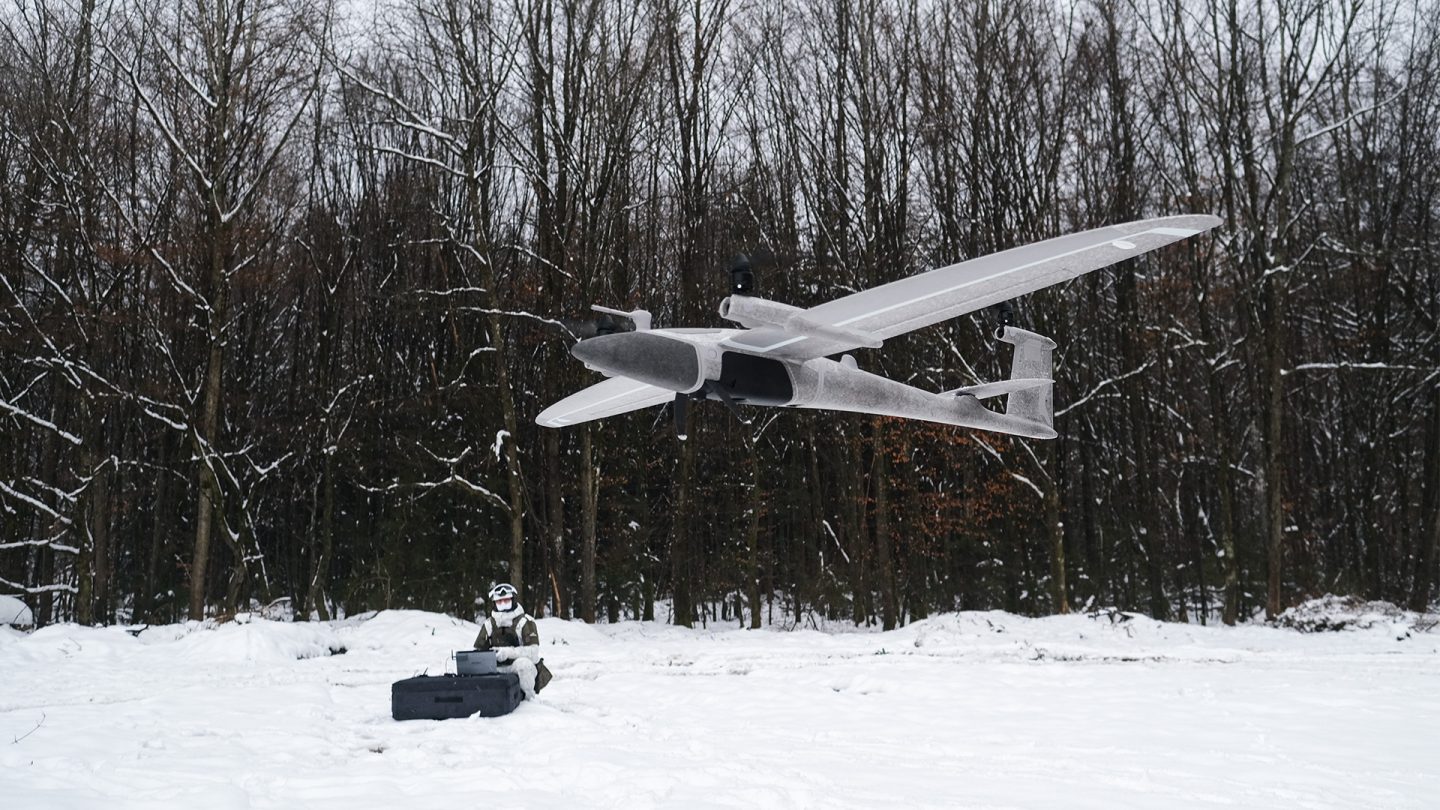
Every long range UAV procurement we have supported in the last seven years eventually narrows to the same engineering question: VTOL drones vs multirotor for long range missions, and which architecture justifies the additional system complexity for the mission profile at hand. The answer is rarely as binary as the marketing literature suggests. Multirotor platforms have matured into reliable, easy-to-operate tools for short-range tactical work, and a well-tuned hexacopter will outperform a poorly integrated VTOL on a 4 km perimeter sweep. But once the mission envelope crosses the 15 km radius, climbs above 3,000 metres density altitude, or demands more than 45 minutes of station time on target, the energy economics turn decisively in favour of fixed-wing VTOL hybrid platforms like Autoabode's VTOL X1. This engineering comparison lays out the physics, the procurement trade-offs, the operational doctrine, and the failure modes that we have seen separate the two architectures in real Indian operating conditions, from Ladakh to the Western Ghats.
The Energy Economics — Why Long Range Favours Fixed-Wing
Lift-to-drag ratio is the number that decides the argument
A multirotor in steady level flight is, in aerodynamic terms, an inefficient hovercraft. Every gram of airframe, battery, and payload is held aloft by the brute thrust of four to eight rotors, with no wing contributing any usable lift. A typical 7 kg industrial hexacopter cruises at a lift-to-drag ratio of roughly 4 to 6 — meaning the propulsion system has to fight 1 N of drag for every 4 to 6 N of weight carried. A modern small fixed-wing platform of comparable mass operates at L/D ratios between 12 and 18 in clean cruise. The consequence at the system level is brutal: for the same battery pack, a fixed-wing aircraft delivers between 2.5x and 3.5x the cruise endurance of an equivalent-mass multirotor. On a 50 km radius reconnaissance leg with a 600 g EO/IR payload, a 6S 22 Ah pack that sustains 28 minutes of multirotor cruise will sustain 95 to 110 minutes of fixed-wing cruise on the VTOL X1 in horizontal-flight mode, with 8 to 10 minutes reserved for vertical takeoff, transition and landing.
Where multirotor still wins on energy
Multirotor energy economics turn favourable in two specific scenarios. The first is dense urban operations where the aircraft must hover, station-keep against gusts, and reposition frequently in a tight volume — under those conditions a fixed-wing platform either cannot fly the profile at all or burns more energy on repeated transitions and circle-back legs. The second is short missions under 8 km radius where the launch, climb-out and recovery transitions of a fixed-wing aircraft consume a disproportionate share of the available energy. Below that radius, the multirotor's poor cruise efficiency is masked by the simple fact that it is never in cruise long enough for the gap to matter.
Mission Profile Decides Everything
The 15 km decision boundary
From a doctrine standpoint, we recommend the same threshold to every Indian defence and survey team we work with: 15 km one-way. Below it, a properly equipped multirotor with two hot-swap batteries and a competent operator will outperform a VTOL on cost, deployment time, and operational simplicity. Beyond it, fixed-wing VTOL hybrids dominate every metric that matters — total mission duration, energy reserve at end-of-mission, payload margin, weather envelope, and recovery flexibility. The 15 km figure is not arbitrary. It is the radius at which a fixed-wing aircraft, accounting for transition losses and a 25 percent reserve, begins to deliver more time on target than a multirotor with the same battery weight. Above 25 km, multirotor is no longer in the conversation for any operationally serious mission.
Mission types that drive the architecture choice
- Border surveillance with 30 to 90 minute station times — fixed-wing VTOL is the only viable architecture
- Forward reconnaissance with sensor handoff over 20 to 60 km — fixed-wing VTOL with EO/IR and SAR/COMINT options
- Mapping and photogrammetry over 200+ hectare AOIs — fixed-wing VTOL for survey efficiency
- Counter-drone over-watch and rapid response within a 5 km bubble — multirotor
- Short-range cordon ISR and forensic post-incident imaging — multirotor
- Indoor inspection, structural close-up, confined-space entry — multirotor
The VTOL X1 is Autoabode's answer to long range Indian operating requirements: 4.5 m wingspan, 6.5 kg MTOW, 1.2 kg useful payload, 180 minute endurance in clean cruise, sea-level to 5,500 m density altitude qualification, and an integrated MeshVani encrypted command-and-control link with AES-256-GCM authentication for BVLOS operations. Operational with Indian defence and paramilitary teams since 2025. Specifications and deployment data: autoabode.com/vtol.
Payload, Sensors and the System Integration Tax
Payload comparison is rarely as simple as comparing maximum take-off weight. A multirotor can lift more raw mass than a fixed-wing aircraft of equivalent battery capacity, but it cannot carry that mass for very long. The honest metric is payload-hours: how many gram-minutes of sensor work can the aircraft deliver per battery cycle. On that scale a 1.2 kg payload carried for 180 minutes on a fixed-wing VTOL outperforms a 2.5 kg multirotor payload carried for 35 minutes by a factor of nearly 2.5x. For survey, ISR and any mapping mission the calculation is even more punishing for multirotor because area covered scales with cruise speed: a 90 km/h fixed-wing aircraft sweeps 270 hectares per hour against a 35 km/h multirotor's roughly 90 hectares per hour, before accounting for endurance. Where multirotor still leads is on payload-pointing — gimbal stability over a fixed point on the ground is significantly better with a multirotor's hover-capable airframe, which is why precision counter-drone over-watch and forensic close-up imaging remain multirotor missions.
Weather Envelope and Operational Reliability
Wind, density altitude, and the Indian operating envelope
A fixed-wing VTOL aircraft handles sustained wind significantly better than a comparable multirotor because the wing carries the weight in cruise and the rotors only have to manage attitude during the takeoff and landing phases. The VTOL X1 is qualified for 12 m/s sustained wind at takeoff and recovery and 16 m/s in transit cruise. A 7 kg multirotor of comparable battery capacity is operationally limited to 9 m/s sustained wind, and its endurance collapses by 35 to 50 percent in the upper half of that envelope as the flight controller redirects energy to attitude correction. In Ladakh, Sikkim and the high passes of Himachal — where afternoon valley winds routinely cross 12 m/s — this is the difference between a flyable mission window and a grounded fleet.
Failure modes are different — neither is harmless
Multirotor failure modes are dominated by motor or ESC loss. Modern hexacopters survive a single motor failure with a controlled descent; quadrotors generally do not. Fixed-wing failure modes are dominated by transition events — a botched VTOL-to-cruise transition is the single most common cause of operational loss for hybrid platforms. A well-engineered VTOL hybrid mitigates this with redundant transition control loops, a generous airspeed margin during the transition window, and an autonomous failsafe that returns to vertical flight if forward airspeed cannot be established. Procurement teams should ask for transition-event failure data specifically, not aggregate flight-hour reliability numbers.
Cost of Ownership and the Hidden Procurement Trade-Offs
A long range VTOL hybrid carries a 2 to 3x acquisition premium over a comparable industrial multirotor on raw airframe cost. That premium pays back on missions where the alternative is a multi-aircraft multirotor sortie, redeployment of forward operating teams, or expensive helicopter time. For an ITBP detachment running daily border patrols across a 40 km frontage, a single VTOL X1 replaces what would otherwise be a three-multirotor rotation and at least one mid-mission battery swap by a forward team. The total cost of ownership crosses below multirotor at roughly 90 days of operational use under that profile. For survey and mapping organisations the crossover is even faster — typically inside 30 missions because survey time-on-station is the dominant cost variable. We have detailed payback calculators for both profiles available on request through the Autoabode applications team.
Regulation, BVLOS and the Indian Compliance Layer
DGCA's 2025 BVLOS rules and the parallel defence-use waivers materially favour fixed-wing VTOL architectures for long range missions. The rules require demonstrated command-and-control link integrity, encrypted telemetry, and a return-to-launch envelope that can be sustained against a single point of failure. Multirotor platforms can technically meet these requirements but rarely have the endurance margin to do so within a useful mission radius — a multirotor that has to reserve 35 percent of its battery for RTL has very little energy left to perform the mission. Fixed-wing VTOL hybrids comfortably reserve 25 percent for RTL and still deliver an operationally meaningful payload time. For Indian Army, ITBP, and DRDO procurements, the encrypted C2 link is non-negotiable; this is where Autoabode's MeshVani-derived AES-256-GCM authenticated link provides a meaningful integration advantage over imported platforms that ship with proprietary, unauditable encryption stacks. See MeshVani and VTOL X1 for the integration detail, and the broader drone lab setup guide for institutional procurement context.
Decision Framework — A Practical Procurement Checklist
- Mission radius — over 15 km one-way, default to fixed-wing VTOL
- Station time on target — over 45 minutes, default to fixed-wing VTOL
- Density altitude — over 3,000 m, fixed-wing VTOL almost always wins on energy
- Sustained wind envelope — over 9 m/s, fixed-wing VTOL is materially safer
- Hover-pointing requirement — multirotor remains the correct choice
- Indoor or confined-space inspection — multirotor only
- Survey area over 200 hectares per sortie — fixed-wing VTOL for efficiency
- BVLOS operations under DGCA — fixed-wing VTOL has structural advantages
Frequently Asked Questions
Q: For a 30 km border surveillance mission with a 1 kg EO/IR payload, which architecture is correct? A: Fixed-wing VTOL is the only operationally responsible answer. A 7 kg multirotor with that payload will not reliably reach 30 km and return with adequate reserve. Autoabode's VTOL X1 covers that profile with 70 minutes of useful station time on target.
Q: Can a fixed-wing VTOL operate from an unprepared landing site at high altitude? A: Yes. The VTOL transition removes the runway requirement entirely. The VTOL X1 has been operated from sites between 4,200 and 5,300 metres ASL across Ladakh and Sikkim with no field preparation beyond a 6 m clear circle for vertical takeoff and landing.
Q: How does endurance compare in Indian summer high-altitude conditions? A: Density altitude penalises both architectures, but multirotor much more harshly because it must hover-lift continuously. At 4,500 m density altitude, a multirotor loses 35 to 45 percent of sea-level endurance. A fixed-wing VTOL loses 12 to 18 percent because cruise lift is only modestly affected by air density.
Q: Is the encrypted command and control link in the VTOL X1 the same as MeshVani? A: It uses the same AES-256-GCM authenticated cryptographic core and frequency hopping spread spectrum physical layer. The C2 implementation is hardened for BVLOS operations and includes redundant link health monitoring and an autonomous return-to-launch failsafe.
Q: What is the realistic procurement lead time for VTOL X1 platforms in India? A: Standard configurations ship in 8 to 10 weeks from order. Custom payload integrations — typically thermal sensors, SAR pods, or COMINT packages — extend that by 4 to 6 weeks depending on integration scope. For Indian Army, paramilitary, and DRDO orders, Autoabode supports prioritised delivery slots.
Rohan Sharma
Head of Avionics & Payload Systems, Autoabode · Autoabode Consumer Electronics Pvt. Ltd.
Expert author at Autoabode — writing at the intersection of industrial 3D printing, defence manufacturing, and advanced UAV systems. Based in New Delhi, India.
Explore Autoabode's Platforms
This article is part of Autoabode's technical journal. Learn more about our core platforms built in India for defence, aerospace, medical and industrial teams:
More from the Journal
Off-Grid Communication Solutions for Mountainous Terrain: An Engineering Field Guide for India's High-Altitude Operators
Off-grid communication solutions for mountainous terrain are not optional in India — they are the difference between a coordinated operation and a stranded section. This engineering field guide breaks down the radio physics that defeats conventional VHF/UHF in the Himalayas, the mesh architectures that survive ridge-line shadowing, and the cold-weather, power-budget and security trade-offs that determine whether a system delivers in the Karakoram and Western Ghats. Built around real deployment data from Autoabode's MeshVani encrypted communicator and MeshVani Relay platform in service with the Indian Army, ITBP, NDRF and high-altitude expedition teams.
Drones & UAV · 7 min readModular UAV Payloads for Multi-Role Missions: A Technical Guide
Explore the technical specifications and strategic advantages of modular UAV payloads for multi-role missions. This guide covers hot-swap systems, sensor fusion, and real-world applications for defense and industry.