
Saving Lives with
3D Printing
How Autoabode helped Fortis Hospital surgeons perform life-saving craniofacial surgery on a child with trigonocephaly
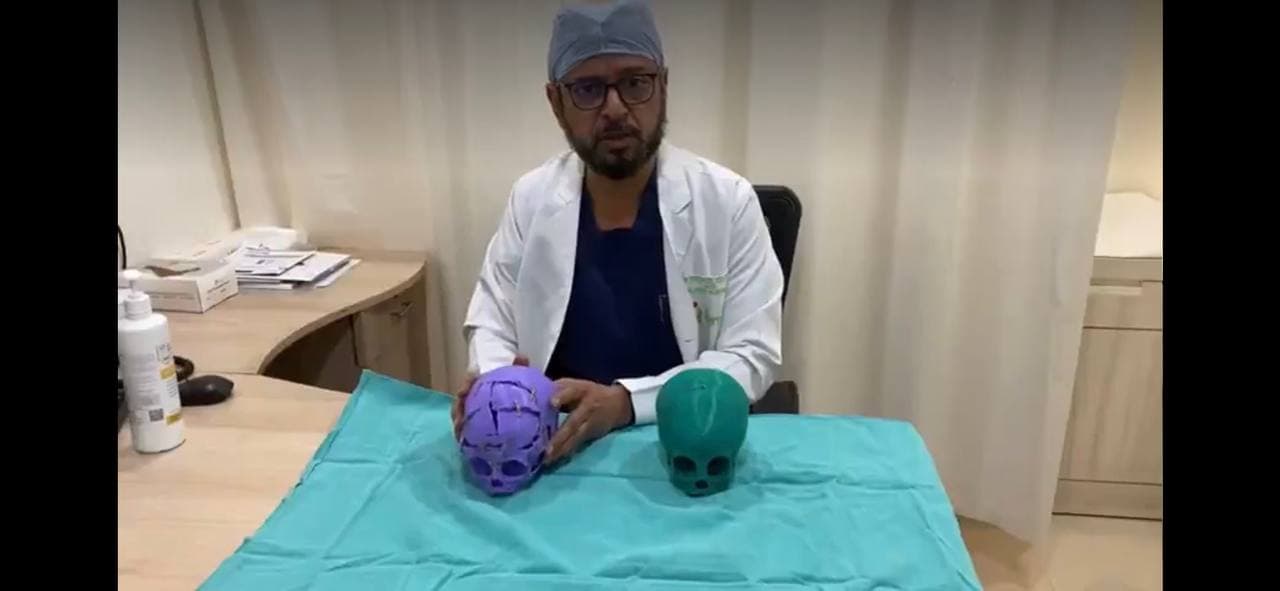
3D Skull Model
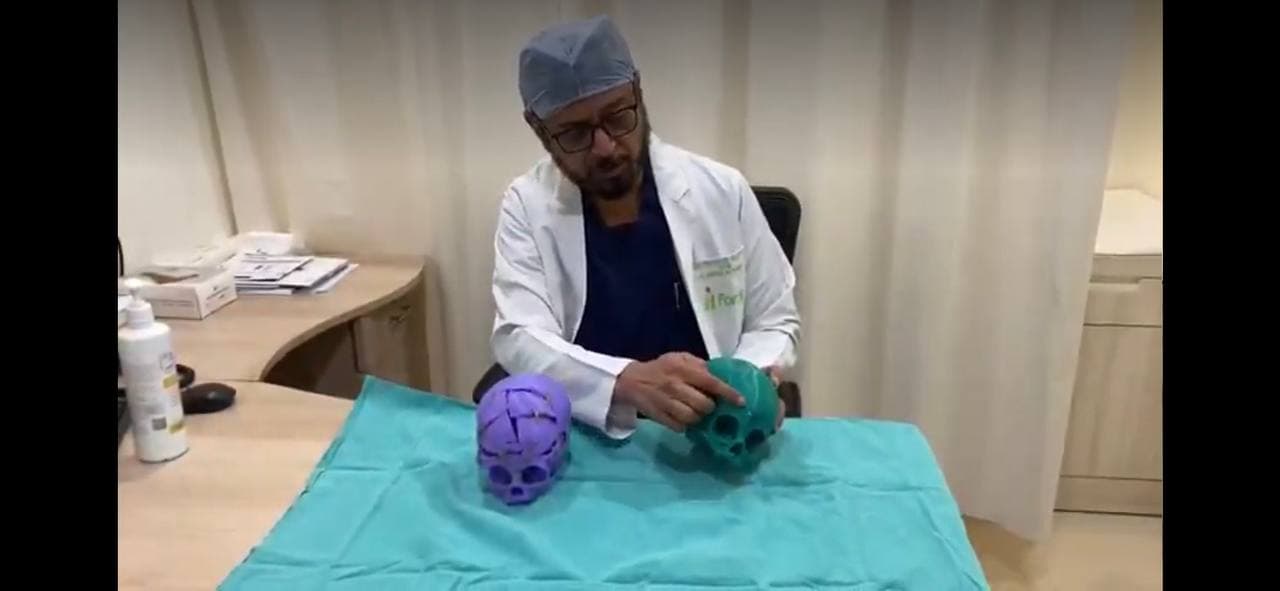
Surgical Planning
FDM Medical Print
Autoabode 3D printed pre-surgical models — precision anatomical replicas from patient CT scan data
The Challenge
A cranio-facial surgery was performed by a team of doctors led by Dr. Sonal Gupta, Director, Neuro & Spine Surgery & Dr. Richie Gupta, Additional Director, Plastic, Aesthetic and Reconstructive Surgery at Fortis Hospital.
The case was surgically challenging and required meticulous planning. The child suffered from trigonocephaly — a congenital condition where the metopic suture fuses prematurely, giving the skull a triangular shape. The surgery carried extreme risks: a single miscalculation could cause the child to go blind, suffer severe bleeding, or even sustain brain damage.
The Autoabode Solution
This was the point where Autoabode came to the rescue with its futuristic 3D printing technology. Mr. Shubham Garg, CEO of Autoabode, rendered his services free of cost to save the life of this child.
The Autoabode team fed the digital data from the patient's 3D CT scan into a Duper 3D printer to print two rapid prototype skull and upper face models — creating exact replicas of the patient's skull.
Patient-Specific Models
Exact replicas from CT scan data for precise surgical planning
Mock Surgery
Surgeons practiced the entire procedure a day before
Zero Risk
All measurements transferred from model to patient
The Surgery
The 3D printed models helped the surgical team determine the exact site, dimension, and angles of the osteotomies (bone cuts) of the skull. The doctors conducted a mock surgery a day prior on the 3D model, allowing them to:
- Visualize the exact anatomy and plan bone recontouring
- Practice the angles and dimensions for bone replacement
- Identify critical structures to protect (brain, eyeballs)
- Reduce actual surgery time and anesthesia exposure
During the actual surgery, the doctors transferred the measurements from the 3D model to the patient's skull. The bones were recontoured to the angles and dimensions as per the model surgery and replaced in the corrected position — protecting the brain and eyeballs throughout.
The Outcome
With all the preparation and dedication, the surgery was successful, and the child is having a speedy recovery.
"3D printing is the future of the healthcare industry and is working like magic."
Technology Used
CT to 3D Workflow
Digital data from 3D CT scans converted to printable models
Medical-Grade Materials
Biocompatible and sterilizable printing materials
Frequently Asked Questions
About 3D printing in medical applications
What is trigonocephaly and how was it treated in this case?+
Trigonocephaly is a congenital condition where the metopic suture fuses prematurely, giving the skull a triangular shape. In this Fortis Hospital case, surgeons used 3D printed skull models created by Autoabode to plan the exact osteotomies (bone cuts) needed to reshape the skull, protecting the brain and eyes during surgery.
How does 3D printing help in craniofacial surgery planning?+
3D printing creates accurate physical replicas of patient anatomy from CT scan data. Surgeons can hold, measure, and practice on these models before surgery. This reduces operating time, improves precision, and minimizes risks — especially critical in pediatric neurosurgery where millimeters matter.
Which Autoabode 3D printer was used for the Fortis Hospital case?+
The surgical planning models were created using Autoabode Duper series FDM 3D printers, which can produce high-precision anatomical models from medical imaging data. The Duper range offers the accuracy and material options needed for pre-surgical planning in complex craniofacial cases.
Can Autoabode create 3D printed models for other medical procedures?+
Yes. Autoabode provides 3D printed pre-surgical models for orthopedics, maxillofacial surgery, cardiac procedures, and educational purposes. Our Duper and Bio Maker series can produce anatomical models in various materials including sterilizable options for surgical planning.
Need 3D Printed Surgical Models?
Partner with Autoabode for patient-specific anatomical models, surgical planning guides, and medical 3D printing solutions.