
PEEK and High-Performance Polymers for Aerospace and Defense 3D Printing
Rajesh Kumar
Senior Technical Writer at Autoabode · Autoabode
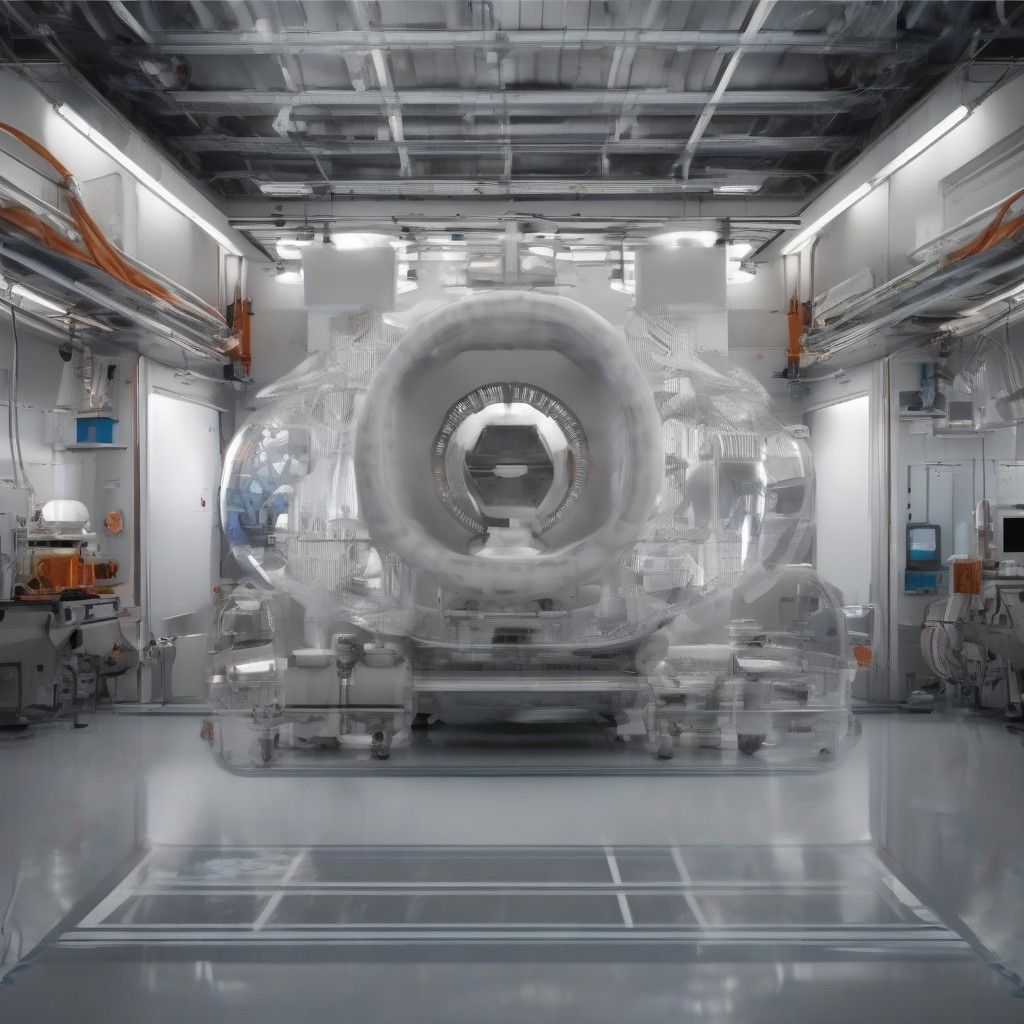
The aerospace and defense industries demand materials that are lightweight, durable, and capable of withstanding extreme conditions. Among the most promising materials for these applications are PEEK (Polyether Ether Ketone) and other high-performance polymers. In this blog post, we explore how these advanced materials are revolutionizing 3D printing in India's aerospace and defense sectors, supported by Autoabode's cutting-edge technologies.
The Role of PEEK in Aerospace and Defense
PEEK is a thermoplastic polymer known for its exceptional mechanical, chemical, and thermal stability. Its high strength-to-weight ratio, resistance to fatigue, and ability to function under harsh environments make it ideal for aerospace and defense applications.
Why PEEK Stands Out
PEEK's superior properties include: - High temperature resistance (up to 260°C) - Excellent strength and stiffness - Outstanding chemical inertness - Low moisture absorption - Biocompatibility in certain grades.
Did you know? PEEK is used in critical aerospace components like engine parts, fuel systems, and avionics due to its lightweight and corrosion-resistant properties.
3D Printing with High-Performance Polymers
Additive manufacturing (AM) technologies like FDM (Fused Deposition Modeling) and SLS (Selective Laser Sintering) are increasingly being adopted for producing PEEK-based parts. These processes offer significant advantages over traditional manufacturing, including reduced material waste, faster production cycles, and the ability to create complex geometries.
- FDM: Ideal for prototyping and functional parts with high precision.
- SLS: Suitable for producing strong, durable components with excellent mechanical properties.
- Both technologies enable rapid iteration and customization, critical for aerospace and defense projects.
Autoabode's Duper XL series (FDM) and SinterX Pro (SLS) are at the forefront of this innovation. The Duper XL offers a build volume of 1000 x 1000 x 600 mm, making it suitable for large-scale defense applications. Meanwhile, the SinterX Pro delivers layer resolutions as fine as 50 microns, ensuring high accuracy in producing PEEK components.
Applications in Indian Aerospace and Defense
In India, the DRDO (Defence Research and Development Organisation) and DGCA ( Directorate General of Civil Aviation) are actively promoting the use of advanced materials and 3D printing for aerospace applications. Autoabode's technologies align with these initiatives, supporting 'Make in India' by providing domestically manufactured, high-performance solutions.
The PLI (Production Linked Incentives) scheme further encourages the adoption of cutting-edge manufacturing technologies. By leveraging PEEK and other high-performance polymers with Autoabode's 3D printers, Indian industries can achieve greater efficiency and self-reliance in producing aerospace and defense components.
For instance, Autoabode's BotBit UAVs and UGV Interceptor utilize advanced polymer parts manufactured through our Duper XL and SinterX Pro systems. These unmanned vehicles demonstrate the real-world application of PEEK and other high-performance polymers in defense scenarios.
Rajesh Kumar
Senior Technical Writer at Autoabode · Autoabode Consumer Electronics Pvt. Ltd.
Expert author at Autoabode — writing at the intersection of industrial 3D printing, defence manufacturing, and advanced UAV systems. Based in New Delhi, India.
Explore Autoabode's Platforms
This article is part of Autoabode's technical journal. Learn more about our core platforms built in India for defence, aerospace, medical and industrial teams:
More from the Journal
Off-Grid Communication Solutions for Mountainous Terrain: An Engineering Field Guide for India's High-Altitude Operators
Off-grid communication solutions for mountainous terrain are not optional in India — they are the difference between a coordinated operation and a stranded section. This engineering field guide breaks down the radio physics that defeats conventional VHF/UHF in the Himalayas, the mesh architectures that survive ridge-line shadowing, and the cold-weather, power-budget and security trade-offs that determine whether a system delivers in the Karakoram and Western Ghats. Built around real deployment data from Autoabode's MeshVani encrypted communicator and MeshVani Relay platform in service with the Indian Army, ITBP, NDRF and high-altitude expedition teams.
Drones & UAV · 7 min readModular UAV Payloads for Multi-Role Missions: A Technical Guide
Explore the technical specifications and strategic advantages of modular UAV payloads for multi-role missions. This guide covers hot-swap systems, sensor fusion, and real-world applications for defense and industry.