
SLS 3D Printer Buying Guide India 2026: How to Specify, Compare and Procure an Industrial Nylon Printer
Priya Mehta
Applications Engineer, Autoabode · Autoabode
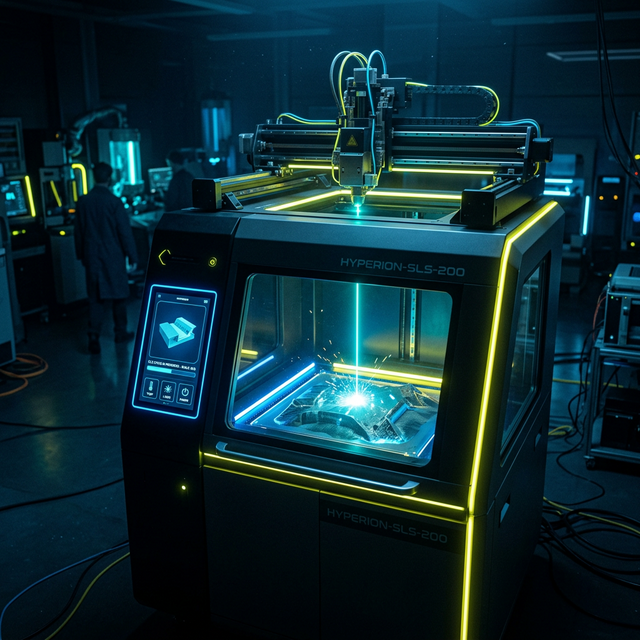
Buying an industrial SLS 3D printer in India in 2026 is a fundamentally different decision than it was even two years ago. For most of the last decade the choice was effectively which imported European or American system to buy, and the conversation was dominated by exchange rates, import duty, and the eye-watering cost of proprietary powder. That has changed. A domestically manufactured, production-grade SLS option now exists, which means an Indian procurement team evaluating selective laser sintering has a genuine make-versus-import decision to make for the first time. This guide is written to help R&D heads, manufacturing managers and procurement teams specify, compare and procure an SLS printer correctly, focusing on the specifications that actually determine part quality and the total-cost-of-ownership maths that imported brochures tend to hide. Throughout, we draw on field data from Autoabode's SinterX Pro, India's first indigenous industrial SLS 3D printer, deployed across defence, aerospace and research labs since 2023.
Why SLS, and Why the Buying Decision Is Different from FDM
Selective laser sintering builds parts by fusing nylon powder layer by layer with a laser, inside a heated build chamber held just below the polymer's melting point. Because the surrounding unsintered powder supports every layer, SLS produces fully dense, isotropic nylon parts with no support structures and complete geometric freedom: interlocking assemblies, internal channels, living hinges and lattice structures all print in a single job. This is why SLS is the technology of choice for functional end-use parts rather than visual prototypes, and it is why the buying decision is more demanding than choosing an FDM machine. With FDM you are largely buying a motion platform and an extruder; with SLS you are buying a thermally controlled process, and small differences in chamber uniformity, laser stability and powder handling translate directly into part-quality differences you will live with for the machine's entire life. If you are still weighing the two technologies, our SLS versus FDM comparison covers the part-economics crossover in detail.
The Specifications That Actually Matter
Build chamber temperature control
The single most important specification on an SLS printer is not the laser, it is the thermal control of the build chamber. SLS works in a narrow process window between the onset of melting and full melt, and the entire build volume must sit inside that window for the duration of a job that can run twenty hours or more. A chamber that drifts by even a few degrees across its width produces parts that are strong in one corner and brittle in another, or that curl and warp on long flat sections. When you evaluate a printer, ask for the chamber temperature uniformity figure across the full build area, not just the set-point accuracy at the centre. The SinterX Pro runs a 200C build chamber with active multi-zone control specifically because thermal uniformity is the property that most directly governs part-to-part repeatability.
Laser specification and scanning
For nylon SLS, a CO2 laser is the correct technology because its wavelength is well absorbed by polyamide powder. The figure to interrogate is not raw wattage but the consistency of delivered energy density across the build area, which is a function of galvanometer scanning quality and beam focus. A 30W CO2 laser with precision galvo scanning, as on the SinterX Pro, delivers ample energy for PA12 and PA11 at production layer rates; chasing higher wattage matters far less than chasing scan consistency. Ask any vendor to show you a full-bed test print with mechanical coupons pulled from the corners and the centre, the spread in tensile strength across those coupons tells you more than any single headline number.
Powder recoating
Each layer of an SLS build begins with a fresh, perfectly even spread of powder laid across the bed. Recoating quality, the evenness and density of that powder layer, sets the floor on surface finish and dimensional accuracy. Bidirectional recoating, which lays powder on both the forward and return strokes, improves throughput and layer consistency compared with single-direction systems. When comparing machines, look at the recoater mechanism and ask about layer-thickness range; a finer minimum layer height gives you better resolution on detailed parts, while a coarser setting prints bulk parts faster.
Build volume matched to your real parts
Build volume is the specification most often over-bought. The right question is not how big the chamber is but how efficiently your actual parts nest inside it, because SLS economics are driven by how densely you pack each build. A chamber that is larger than your typical job simply wastes thermal energy and powder. Map your real part mix, sizes, quantities, turnaround needs, and size the machine to nest those jobs at high packing density. A correctly sized indigenous system will almost always beat an over-specified imported one on cost per part.
SinterX Pro at a glance: India's first and only domestically manufactured industrial SLS 3D printer. 30W CO2 laser with precision galvanometer scanning, 200C actively controlled build chamber, bidirectional powder recoating, and a fully open-material system supporting PA12, PA11, glass-filled PA12, carbon-filled nylon, TPU and flame-retardant nylon. Defence-tested by DRDO and in service across Indian aerospace and research institutions. Built, supported and serviced in India, with no import lead time and no proprietary powder lock-in. Request a datasheet at info@autoabode.com or explore the SinterX Pro specifications.
The Open-Material Question: The Decision That Sets Your Per-Part Cost
The most consequential commercial decision in SLS procurement is whether the machine runs an open or a closed material system. Closed systems lock you into the manufacturer's proprietary powder, often with chipped cartridges that refuse to run third-party material. The headline machine price is only the entry ticket; the proprietary powder is where the lifetime cost accumulates, frequently at two to four times the price of equivalent open-market polyamide. Over a five-year production life the powder bill routinely exceeds the original machine cost on a closed system.
An open-material system, by contrast, lets you qualify and run powder from any reputable supplier, negotiate on price, and switch grades as your application demands. The SinterX Pro is deliberately an open-material platform precisely because per-part economics over the machine's life matter more to Indian manufacturers than any single brochure specification. If you are weighing the indigenous-versus-imported decision specifically on lifetime economics, our Indian versus imported 3D printer comparison and the Autoabode versus EOS comparison lay out the numbers side by side.
Total Cost of Ownership: What the Brochure Doesn't Show
Sticker price is the least useful number in an SLS purchase. The figure that should drive the decision is total cost of ownership across the realistic service life of the machine, and it has five components beyond the purchase price: powder cost per kilogram at your real refresh ratio, energy consumption per build, service and spare-parts cost, downtime cost when the machine is waiting on support, and the cost of capital tied up in import duty and shipping for an overseas system.
Powder refresh ratio
In SLS, the unsintered powder around your parts is not all reusable. A fraction must be replaced with virgin powder on every build to maintain part quality, this is the refresh ratio, typically expressed as the percentage of fresh powder mixed into recycled powder. A realistic refresh ratio for PA12 sits in the region of 30 to 50 percent depending on the application and the thermal history of the recycled powder. This single number, multiplied by your powder price and your annual build volume, often dominates the entire operating cost. It is the first figure you should model, and the open-versus-closed material question feeds directly into it.
Service, spares and downtime
For an imported system, a failed laser or galvanometer can mean weeks of downtime waiting on an overseas engineer and customs-cleared spare parts. For a production line, that downtime cost frequently dwarfs the part cost itself. A domestically manufactured machine with in-country engineering support and locally stocked spares changes this calculus entirely, the difference between a two-day fix and a six-week wait is, for many manufacturers, the deciding factor regardless of headline price. When you evaluate any SLS vendor, ask explicitly about guaranteed response time, spare-parts location, and who physically performs the repair.
Matching the Machine to Your Application
The right SLS printer depends on what you actually print. A defence or aerospace lab producing flight-critical brackets and housings will prioritise material traceability, the ability to qualify custom powders, and validated mechanical repeatability, exactly the requirements that drove the SinterX Pro's defence testing programme with DRDO. A university or innovation lab teaching additive manufacturing will weight ease of operation, training and open material access so students can experiment freely. A contract manufacturer running serial production will optimise relentlessly for cost per part, which means powder economics and nesting density above all. Before you shortlist machines, write down your application profile in these terms, it converts a confusing spec-sheet comparison into a clear ranking. To go deeper on material selection, our PA12 versus PA11 material guide explains how the two workhorse nylons differ in practice.
A Procurement Checklist for SLS in India
- Specify build chamber temperature uniformity across the full bed, not just centre set-point accuracy, this governs part-to-part repeatability more than any other number
- Ask for a full-bed test print with tensile coupons pulled from corners and centre, and review the spread in mechanical properties rather than a single headline figure
- Confirm the material system is genuinely open, that you can qualify and run third-party powder without cartridge lock-out
- Model total cost of ownership over five years: machine price plus powder at your real refresh ratio plus energy plus service plus downtime, not sticker price
- Establish the refresh ratio for your target material and application, and multiply it out against your projected annual build volume
- Size the build volume to your real part mix and nesting density, do not over-buy chamber size you will not pack
- Get guaranteed service response time, spare-parts location and the identity of who performs repairs in writing before purchase
- For imported systems, factor import duty, shipping, customs lead time and currency risk into the landed cost and the spares supply chain
- Verify any defence, aerospace or medical certification claims against the actual documentation, not the brochure
- Request a sample part printed in your chosen material from your own CAD file before committing
The Indigenous Option in 2026
The arrival of a domestically manufactured industrial SLS printer changes the buying decision in ways that go beyond price. It removes import lead time, eliminates proprietary-powder lock-in, brings service engineering into the same time zone and supports the Make in India advanced-manufacturing agenda that increasingly shapes public-sector and defence procurement. None of this means an indigenous machine is automatically the right answer for every buyer, it means that, for the first time, the comparison is real and worth running properly. Specify against your own application, model the five-year total cost of ownership honestly, and insist on a sample part from your own file. If you would like to benchmark your requirement against a working indigenous system, the Autoabode applications team can run your CAD file on a SinterX Pro and return both the part and the per-part cost model. For the latest pricing context, see our SLS 3D printer price in India page.
Frequently Asked Questions
Q: How much does an industrial SLS 3D printer cost in India in 2026? A: Industrial SLS systems span a wide range depending on build volume, material system and origin. Imported European production systems land at a substantial premium once import duty, shipping and currency are included, and carry ongoing proprietary-powder costs. A domestically manufactured open-material system such as the SinterX Pro is positioned well below imported equivalents on both purchase price and lifetime running cost, primarily because of open powder sourcing and in-country service. The honest answer for any specific buyer comes from a five-year total-cost-of-ownership model built around their real build volume, contact info@autoabode.com for a quotation and TCO worksheet.
Q: What is the difference between an open-material and a closed-material SLS printer? A: A closed-material system only runs the manufacturer's proprietary powder, often enforced by chipped cartridges, which means you pay the manufacturer's price for material for the machine's entire life. An open-material system lets you qualify and run powder from any reputable supplier, so you can negotiate price and switch grades freely. Because powder cost over five years frequently exceeds the original machine price, the open-versus-closed decision is usually the single biggest driver of lifetime SLS economics. The SinterX Pro is a fully open system supporting PA12, PA11, glass-filled PA12, CF-nylon, TPU and flame-retardant nylon.
Q: What specifications matter most when buying an SLS printer? A: Build chamber temperature uniformity across the full bed is the most important specification, because it governs part-to-part repeatability over long builds. After that, prioritise consistency of laser energy density across the build area over raw wattage, recoating quality and layer-thickness range, and a build volume matched to your real part mix and nesting density. Always validate these with a full-bed test print and tensile coupons pulled from different bed locations rather than trusting headline numbers.
Q: Is a made-in-India SLS printer as good as an imported one? A: For the right application, yes. The SinterX Pro is India's first indigenous industrial SLS printer, runs a 200C controlled build chamber and 30W CO2 laser, and has been defence-tested by DRDO with PA12 part quality reviewers describe as comparable to European systems. Beyond part quality, the indigenous option removes import lead time, proprietary-powder lock-in and overseas service delays. The correct way to decide is to print a sample part from your own CAD file on the candidate machines and compare the parts and the per-part cost directly.
Q: What is a powder refresh ratio and why does it matter for cost? A: The refresh ratio is the percentage of fresh virgin powder that must be mixed into recycled powder on each build to maintain part quality, because the unsintered powder around your parts degrades thermally and cannot all be reused. For PA12 it typically sits around 30 to 50 percent depending on application. Multiplied by your powder price and annual build volume, the refresh ratio often dominates total operating cost, which is why an open-material system that lets you source competitively priced powder has such a large effect on lifetime economics.
Priya Mehta
Applications Engineer, Autoabode · Autoabode Consumer Electronics Pvt. Ltd.
Expert author at Autoabode — writing at the intersection of industrial 3D printing, defence manufacturing, and advanced UAV systems. Based in New Delhi, India.
Explore Autoabode's Platforms
This article is part of Autoabode's technical journal. Learn more about our core platforms built in India for defence, aerospace, medical and industrial teams:
More from the Journal
Off-Grid Communication Solutions for Mountainous Terrain: An Engineering Field Guide for India's High-Altitude Operators
Off-grid communication solutions for mountainous terrain are not optional in India — they are the difference between a coordinated operation and a stranded section. This engineering field guide breaks down the radio physics that defeats conventional VHF/UHF in the Himalayas, the mesh architectures that survive ridge-line shadowing, and the cold-weather, power-budget and security trade-offs that determine whether a system delivers in the Karakoram and Western Ghats. Built around real deployment data from Autoabode's MeshVani encrypted communicator and MeshVani Relay platform in service with the Indian Army, ITBP, NDRF and high-altitude expedition teams.
Drones & UAV · 7 min readModular UAV Payloads for Multi-Role Missions: A Technical Guide
Explore the technical specifications and strategic advantages of modular UAV payloads for multi-role missions. This guide covers hot-swap systems, sensor fusion, and real-world applications for defense and industry.